

Key Takeaways
- A formal letter uses a fixed structure made of the sender’s address, date, recipient’s block, salutation, body, closing, and signature.
- The formal letter template helps students create organized communication for academic or workplace needs.
- Short, direct paragraphs in the body keep the message easy to understand.
- Using a template and the provided examples makes it simpler to format a clean, professional letter.
To write a formal letter, you should place your address at the top, add the date beneath it, list the recipient’s full details, and open with a precise salutation. Then, start working on body paragraphs that include the main message of your letter. Finally, end with a closing paragraph and a signature that confirms authorship.
This article describes how a formal letter template looks, along with downloadable PDF files for students so they can see how the letter's elements work together. If you need help with other academic tasks, EssayPro's essay extender can give you a hand in shaping your ideas more effectively.

Too Much On Your Plate?
Delegate your tasks to EssayPro’s experts so you don’t have to worry about authenticity.

What Is a Formal Letter?
A formal letter is a written message that follows a set structure in a professional tone. People send these letters when they communicate with schools, companies, or offices that expect clear and organized information. The layout keeps everything easy to follow because each section appears in a strict order. Students often rely on this format when they apply for programs, request official details, or contact instructors about academic matters.
Main types of formal letters include:
- Business letters
- Cover letters
- Complaint letters
- Inquiry letters
- Recommendation letters
- Application letters
When Is a Formal Letter Sent?
A formal letter is sent when the situation calls for clear, professional documentation. It is used when the writer needs a professional tone and a traceable written record.
Common cases include:
- Job applications or internship requests
- Academic communication with instructors or departments
- Official requests for information or confirmation
- Professional correspondence with companies or service providers
- Scholarship or program applications
- Complaint or resolution requests
Components of a Formal Letter
A formal letter includes the sender's address and date, the recipient's address, a salutation, the body of the letter, a closing, and the signature. These elements follow a fixed order that creates a reliable formal letter structure used across schools, offices, and public institutions.
Sender’s Address
You place the sender's address at the top so the recipient immediately knows where the letter came from. It includes your full name, street address, city, and postal code. This block removes any uncertainty about the source of the letter.
Date
The date appears directly under the sender’s address. It records the exact day the letter was sent, which helps with filing and any future reference. A clear date section keeps the correspondence traceable.
Recipient’s Address
The recipient’s address lists a complete name, job title, organization, and full location. These details guide the letter to the correct destination and prevent delivery errors. A precise entry also communicates respect for the recipient’s role.
Salutation
The salutation opens the letter with a measured, professional tone. It uses the recipient’s name or title to acknowledge who will read the message. A correct salutation signals care and sets the rhythm for the lines that follow.
Body of the Letter
The body includes the purpose of the communication. Each paragraph states information directly, builds on the main point, and keeps the message easy to follow. Clear wording keeps the reader focused on the reason the letter exists.
Closing
The closing prepares the reader for the end of the message with a short, polite phrase. It marks the transition into the final details without interrupting the flow.
Signature
A handwritten signature confirms authorship. The typed name beneath it adds clarity and ensures the reader never wonders who wrote the letter.
Human-Written, Zero AI
When accuracy matters, trust humans — not algorithms. Hire a top EssayPro writer now.
How to Write a Formal Letter?
Writing a formal letter calls for a clear structure and a steady professional voice. Most people follow the full block format, where text is left-aligned and single-spaced. This clean layout helps the reader easily follow the message. Here's how you should approach the process:
- Identify why you are writing and collect the details you need.
- Write your address at the top and place the date underneath it.
- Add the recipient’s address and make sure the name and title are correct.
- Use a salutation that fits the situation.
- Write the body in clear, short paragraphs that explain your message.
- End with a polite closing phrase.
- Sign your name and type it again below your signature.
Feel free to check out our guide on an open letter format, as well, since it’s a type of formal letter that is publicly published.
Formal Letter Template
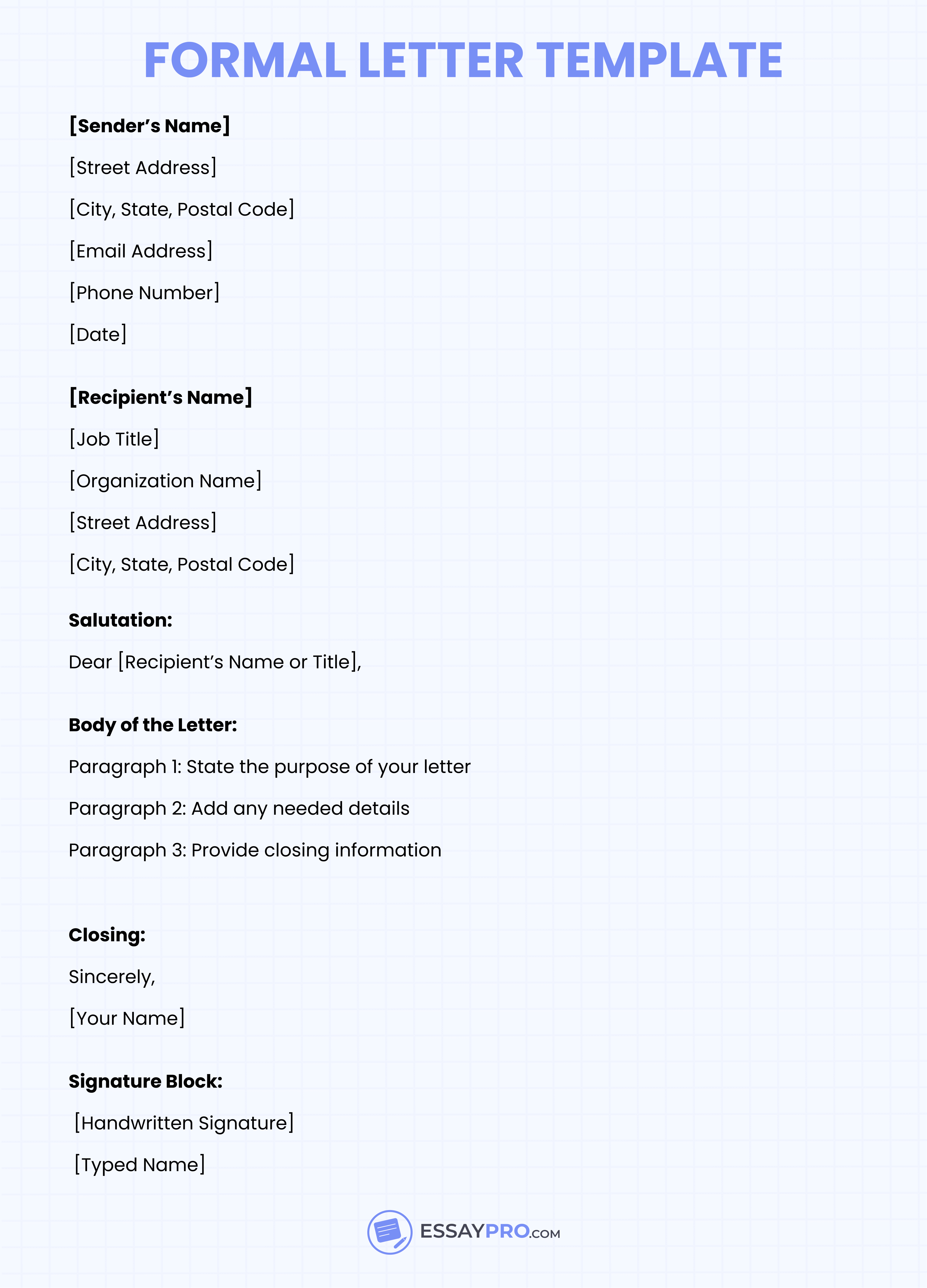
A formal letter template starts with the sender’s address, places the date beneath it, and lists the recipient’s full details below that block. The salutation opens the message, followed by short, direct body paragraphs. A polite closing and a signature finish the page. To understand this better, take a look at the formal letter template for students below:
Formal Letter Examples
Formal letters follow the same structure, but each type handles a different communication need. Each formal letter sample in the section below helps you trace how the parts work on the page and how the tone shifts with the purpose. Check out the PDF examples of different kinds of such letters.
Formal Letter Example #1: Business Letter
The reader of a business letter should understand its goal in seconds. The sample shows a direct purpose in the very beginning, so all details are clear.
Formal Letter Example #2: Cover Letter
The strength of a cover letter depends on your ability to show relevance. It should show real tasks you handled, the skills you used for them, and the achieved outcomes. This way, the employer can clearly see how you fit the company's needs.
Formal Letter Example #3: Complaint Letter
Clarity is what makes this complaint letter example effective. Giving the exact issue, the dates involved, and the result you expect allows the company to address the situation without extra back-and-forth.
Formal Letter Example #4: Inquiry Letter
Inquiry letters work well when the question is clear. A short explanation of why you need the information and how you plan to use it guides the recipient toward a precise answer.
Formal Letter Example #5: Recommendation Letter
A strong recommendation comes from specific observations. Mentioning the person’s strongest qualities and describing moments that reveal those qualities gives the reader a clear sense of the candidate’s abilities.
Avoiding Errors When Drafting a Formal Letter Template
A formal letter template creates order, but small missteps can blur the message quickly. The simplest way to avoid trouble is to carefully check each part before sending the letter.
- Addresses that miss a line or contain old information can send the letter to the wrong place.
- A missing date removes the timeline that the reader may need later.
- Greetings that sound casual break the tone before the message even begins.
- Dense paragraphs hide the point and force the reader to search for it.
- A closing phrase that feels out of place can disrupt the final impression.
- An unsigned letter leaves the reader unsure who actually wrote it.
The Last Word
A formal letter works best when each section follows a clear order, and the writing stays simple and precise. The template, examples, and steps in this guide give students a reliable way to create professional communication for academic or workplace needs.
If you need extra support during your academic journey, you can rely on EssayPro for assistance in your writing assignments.
Don’t Want To Risk AI Detection?
EssayPro’s real writers support you from draft to final results.
FAQs
What Is A Formal Letter?
What Does A Formal Letter Template Look Like?
How To Structure A Formal Letter?
Where Do You Put The Date On A Formal Letter?
Does The Formal Letter Template Include A Subject Line Section?

Ana Ratishvili
Ana is a professional literary writer with a Master’s Degree in English literature. Through critical analysis and an understanding of storytelling techniques, she can craft insightful guides on how to write literary analysis essays and their structures so students can improve their writing skills.
.webp)
.webp)