Key Takeaways
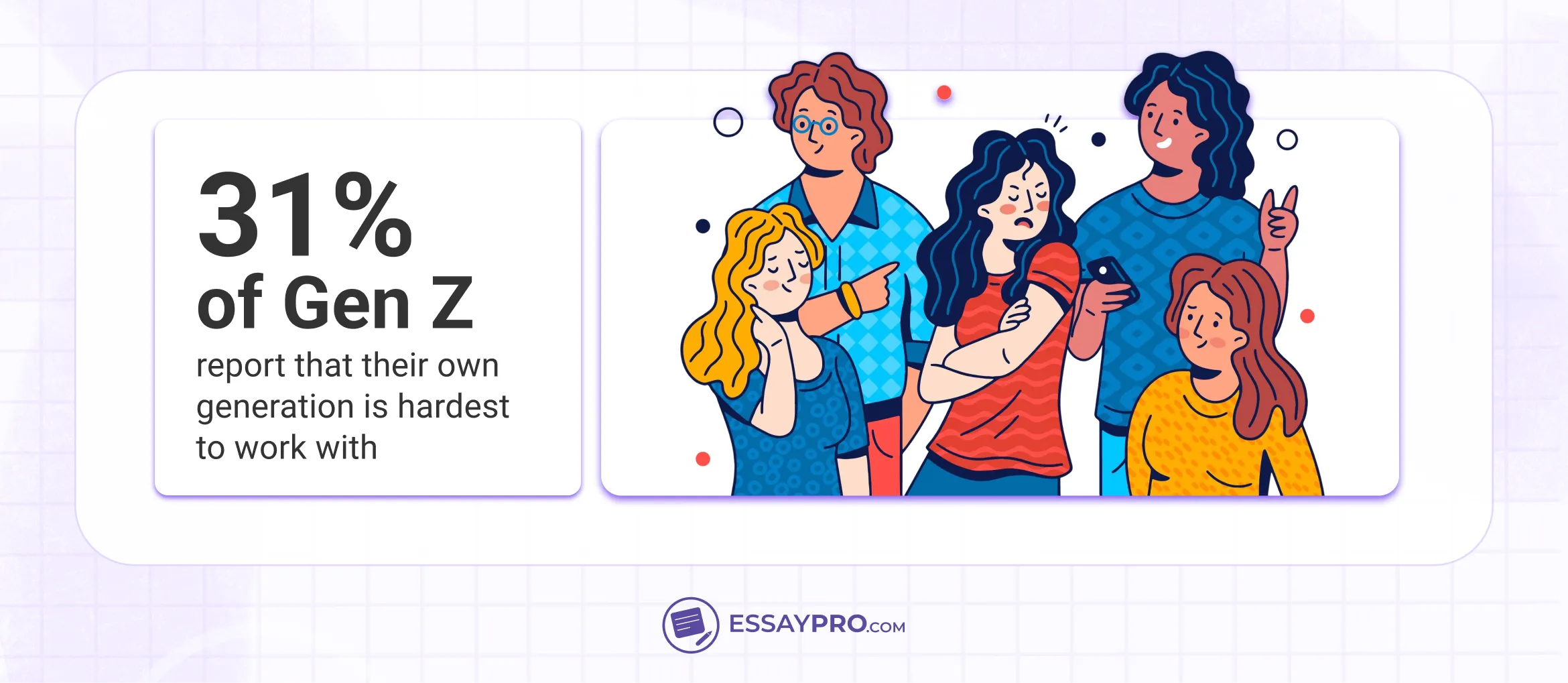
- 31% of Gen Z say their own generation is the hardest to work with. That number shows how much tension they feel inside younger teams.
- Gen Z at work carries strong self-criticism. Online habits, loose boundaries, and unclear communication make teamwork drain energy quickly.
- Older co-workers feel easier to work with. Millennials and Gen X offer clearer direction and more consistent work habits, which reduces stress for younger employees.
- Remote beginnings left a lasting imprint. Many learned to work and study online, and those patterns don’t always translate well to in-person or mixed teams.
Something interesting keeps happening inside modern offices. Managers discuss it in brief hallway conversations, and younger workers whisper about it during breaks. A noticeable number of Gen Z in the workplace tries to avoid teaming up with peers their own age. The trend appears small at first glance, yet the pattern continues to surface in surveys and daily behavior. Many young employees report feeling overwhelmed by dynamics that mirror their own habits, expectations, and anxieties. That tension creates a loop they struggle to break.

Gen Z Leans Away From Its Own Age Group
Studies paint a picture of internal tension. 45% of US hiring managers pointed to Gen Z as the most difficult generation to work with. But what’s more important is that half of Gen Z hiring managers say that their own generation is the most challenging to manage. The percentage drops to 26% when it comes to millennials, 13% for Gen X, and 9% for baby boomers. The gap shows a level of self-frustration that rarely appears in workplace research. The criticism becomes even sharper in the details. The numbers describe a generation that senses its own patterns and carries mixed emotions about them. Let's take a look at the data:
- 53% dislike the constant online presence they see in their peers
- 37% feel drained by the habit of acting detached
- 32% feel pressure from the need to appear unique
- 42% worry about dependence on AI tools
- 49% feel overwhelmed by oversharing on social platforms
- 80% said they feel mistreated at work
- 48% expect themselves to become stronger leaders over time.
Why Gen Z Avoids Working With Gen Z Coworkers
Many young employees describe a strange tension when they work with peers their own age. Because of these dynamics, some days feel smooth, while others feel unpredictable. That unpredictability creates a level of caution that is not as evident with older co-workers. The group wants stability, yet the day-to-day rhythm slips in and out of focus. Here are the main reasons why young workers try to avoid collaborating with the same age group:
- Projects get dropped halfway through. Someone starts with enthusiasm, slows down once the work becomes repetitive, and the rest of the team handles the unfinished pieces.
- Boundaries shift without warning. One person checks messages deep into the night, another avoids all communication outside set hours, and no one knows the actual ground rules.
- Responsibility moves around too easily. A task drifts between people because no one claims ownership with confidence, and deadlines wobble as a result.
- Communication lacks direction. Updates spread across different channels, and the team spends more energy searching for clarity than building momentum.
These habits create a pattern that wears teams down over time. Each issue looks small on its own, yet the combination shapes the way Gen Z co-workers experience working with one another. The frustration grows because they recognize the problems without knowing how to fix them in real time.
Communication Problems Among Gen Z Employees
One of the most prominent Gen Z employees problems is communication. This is what ultimately shapes the way a team functions, yet the younger generations sometimes feel stuck here. Quick messages on Slack or similar apps are suitable for small updates, although they often fall short once a task requires clear direction. One person asks for background information. Someone else wants to talk it out in a meeting. The conversation ends up scattered, and no one feels sure about the plan. Conflict avoidance adds another complication. A misunderstanding sits there for days because no one wants to bring it up, and the tension shows in the work.
Work-life expectations shift things, too. Many young workers protect their time and try to keep stress low. That priority makes sense, although it creates uneven pacing when some teammates move fast, and others slow down for the sake of balance. Career goals add more weight. They want steady progress, meaningful work, and a sense that their effort leads somewhere. When those signs disappear, motivation drops, and teamwork becomes harder than it needs to be.
Related reading: postgraduate employability analysis.
Why Gen Z Prefers Working With Older Generations
Many young employees say they feel more at ease when their teams include millennials or Gen X. The atmosphere changes in a way that removes pressure. Gen X holds 31% of the workforce, and their long experience creates a calm, predictable working environment. Younger employees pick up on that immediately. Millennials offer another kind of support. They make up 36% of the workforce and usually communicate with more clarity, which helps Gen Z understand expectations without guessing. Mentorship also plays a major role. 76% of employees say guidance matters, and older co-workers can explain problems in a way that feels patient and useful instead of controlling.
Projects run more smoothly around people who know how to organize their work and set clear priorities. Gen Z responds well to that kind of consistency because it removes a lot of uncertainty that appears inside younger teams.
- Gen X sets a steady workflow shaped by long-term experience.
- Millennials offer clearer communication and smoother collaboration.
- Older co-workers keep routines stable during stressful projects.
- Intergenerational groups give Gen Z space to grow without pressure.

Upgrade to Human-Written
Get stress-free academic help from someone who truly understands your struggle — a real EssayPro writer.
How Remote Work Increases Gen Z Workplace Friction
A large share of Gen Z entered college and early careers during the COVID-19 pandemic, which transitioned classrooms, internships, and first jobs to laptops. That experience set their foundation. Many started full-time work through virtual onboarding, met teammates through video calls, and spent months building relationships without sharing a physical space. These beginnings influence how they communicate now. Quick chats replace longer conversations. Questions that could be settled in a hallway turn into long message threads. Tone becomes harder to read, and small misunderstandings build quietly.
Survey data highlight this shift. 57% of Gen Z prefer in-person work, which shows how much they value real connection even after growing up in digital settings. Yet, according to Deloitte research, it becomes evident that younger workers still want the freedom to choose their work location. Microsoft found that 85% of employees feel encouraged to come in when they can strengthen team relationships. Remote work supports focus, although collaboration can be weakened when people rarely interact face-to-face.
What Employers Should Understand About Gen Z Workers
Remote habits influence the entire workflow, and employers feel that impact when they manage younger teams. Productivity drops once long message threads replace direct conversations. Tasks slow down because people wait for replies instead of talking through problems in real time. Gen Z workers handle assignments well, yet they need clear roles, simple instructions, and regular check-ins to stay confident in their direction.
Hiring also changes under these conditions. A remote candidate may look strong on paper, although they need careful onboarding that introduces real co-workers, shared routines, and the way projects actually move inside the company. Managers who ignore this step often watch young employees drift into confusion.
Team structure matters as well. Gen Z responds to managers who communicate early and often. They want guidance, honest feedback, and a reason to gather in person. Offices run efficiently when those in-person moments include real collaboration or connection instead of empty desk time. Employers who build that kind of environment see far fewer friction points with Gen Z workers.
How Managers Can Adapt to Gen Z Needs
Gen Z management challenges persist because employers are usually unsure about how to support them. That happens mostly because Gen Z wants clearer direction than previous generations. Once managers make sure the expectations are direct and nothing is left open to interpretation, managing Gen Z employees becomes easier.
Young people want to know the goal, the deadline, and the standard. They also work better when feedback comes regularly instead of being saved for rare performance reviews. Accountability improves when every task has one clear owner instead of bouncing between several people. Mixed-generation teams help too because they bring more experience into the room and give young workers someone to learn from. Here's what managers should do:
- Explain goals, timelines, and communication rules in plain language.
- Give short, consistent feedback so no one feels lost.
- Assign each task to one person so ownership stays clear.
- Build teams that include different age groups to balance strengths.
If you've just finished your studies and are looking for career opportunities, take a look at our article on what can you do with a business degree.
The Last Word
Gen Z’s workplace friction comes from unclear communication, remote-first habits, and uneven collaboration inside younger teams. They often feel more supported with older co-workers who bring experience and clearer routines. Managers improve results when they set direct expectations, give regular feedback, and build mixed-generation teams that balance strengths. These steps create workplaces where Gen Z can grow with fewer daily obstacles.
FAQs
Why Do Gen Z Employees Avoid Their Own Age Group?
What Problems Do Gen Z Workers Face at Work?
Why Do Gen Z Employees Prefer Older Coworkers?

Sopho Miller
is an experienced content writer who specializes in digital marketing, business, and academic topics. With a Master’s degree in Digital Marketing, she combines her expertise with a practical approach to create clear, engaging, and educational content. She crafts detailed guides and resources that support students in their academic journey. Outside of work, Sopho stays current with the latest industry trends and regularly attends workshops to further sharpen her skills.