Student Lifestyle and Cardiovascular Awareness: An Evidence-Based Study
Cardiovascular disease is commonly viewed as a condition affecting middle-aged or older adults, yet behavior patterns established during university years may contribute to long-term outcomes. This study examines how stress, physical activity, and student well-being intersect with awareness of cardiovascular health, relying on verified survey data from U.S. adult and student populations.
Data Sources & Methodological Notes
This study synthesizes data from reputable sources:
- American College Health Association - National College Health Assessment (NCHA), which surveys college students biannually on stress, sleep, mental health, and lifestyle factors.
- CDC’s National Health Interview Survey (NHIS), 2020, as summarized in NCHS Data Brief 443, regarding U.S. adult compliance with physical activity guidelines.
- Supplementary sources on broader activity and health behavior trends.
Because direct national-level data on “cardiovascular awareness among students” are limited, this analysis draws inferential connections between student stress, activity levels, and general adult health behavior benchmarks.
Verified Findings
Stress and Student Perceptions
- In the Spring 2024 NCHA survey, 76.4% of college students reported experiencing moderate or high levels of stress within the preceding 30 days.
- In prior NCHA reports, key academic impediments cited by students included stress (37.4%), sleep difficulties (24.3%), and depression (23%) among others.
- Mental health and sleep issues consistently rank among the top challenges impacting academic performance in student surveys.
These elevated stress levels suggest that psychological load is a major background factor in many students’ daily lives.
Physical Activity Among U.S. Adults
- According to the 2020 National Health Interview Survey, 24.2% of U.S. adults aged 18 and over met the 2018 Physical Activity Guidelines combining both aerobic and muscle-strengthening activity.
- In the same dataset, 46.9% of adults met the guideline of aerobic activity (regardless of strength components).
- A more recent analysis (2022) finds that only 24.3% of U.S. adults met both aerobic and muscle-strengthening guidelines, with 22.9% meeting only aerobic guidelines, 6.3% meeting only strength guidelines, and 46.5% meeting neither.
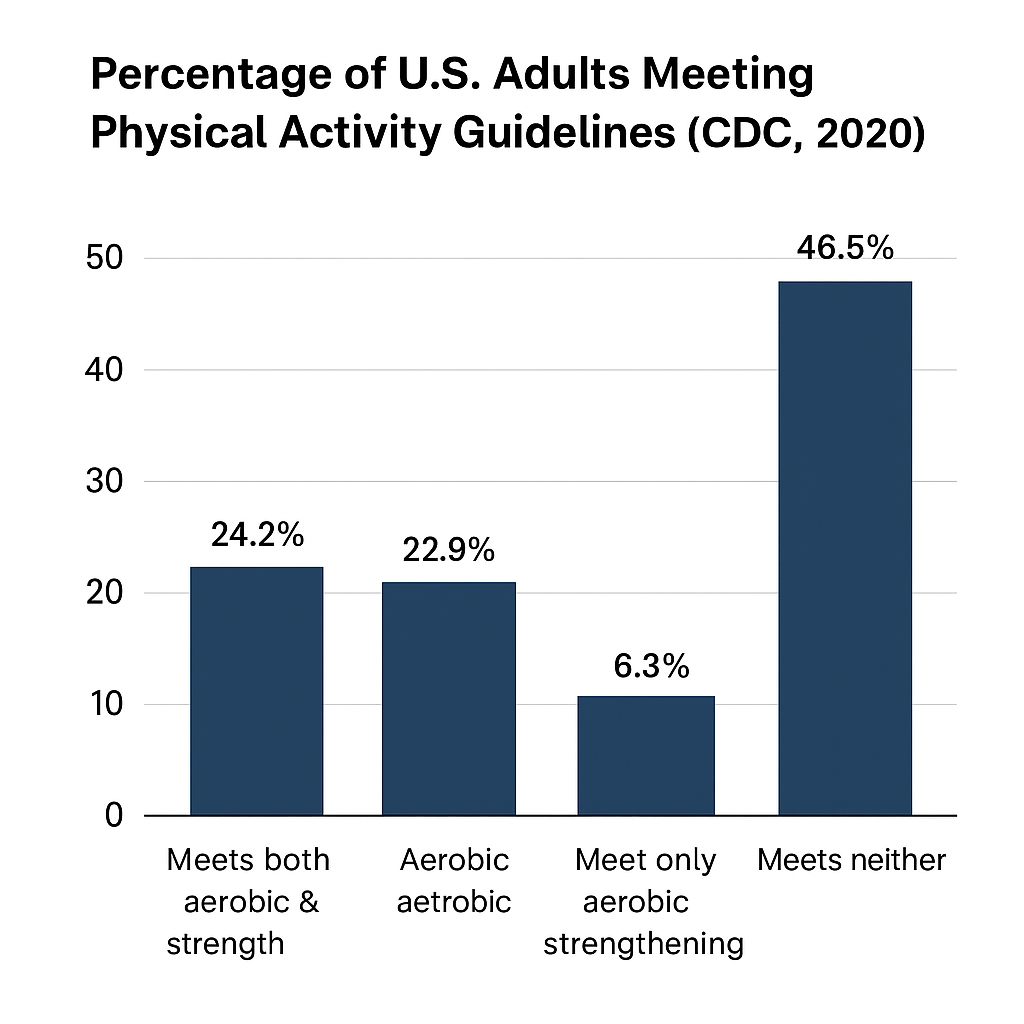
These figures show that less than one in four adults fully adheres to combined physical activity recommendations.
Inactivity and Lifestyle Trends
- From 2017 through 2020, data from the Behavioral Risk Factor Surveillance System (BRFSS) indicate that 25.3% of U.S. adults reported no physical activity outside of work during the previous month.
- Healthy People 2030 reports that “only 1 in 4 adults” meet both aerobic and muscle-strengthening guidelines, reinforcing the low compliance rates.
Inferring Student Behavior & Awareness
While student-specific data for cardiovascular awareness are lacking, the juxtaposition of high stress levels and low adult activity compliance points to a gap: many students may not internalize preventive health behaviors early. If adult populations struggle to meet physical activity benchmarks, students burdened by academic stress and lifestyle constraints are unlikely to exceed those levels without targeted intervention or education.
Moreover, high stress and frequent sleep difficulties may reduce motivation or capacity for regular exercise, further distancing students from the behaviors that support cardiovascular resilience.
Discussion & Implications
The convergence of elevated student stress and low general adult compliance with activity guidelines suggests that universities have a strategic role in shaping preventive health culture. The observed patterns raise key implications:
- Awareness gap: Without explicit education, students may view cardiovascular health as a distant concern, not one relevant to their stage of life.
- Behavioral intervention: Programs that integrate movement into campus life (e.g. walking paths, active learning breaks) might raise baseline activity.
- Stress mitigation: Addressing stress and sleep issues can indirectly support healthier choices, including physical activity and nutrition.
- Targeted messaging: Framing heart-health behaviors in terms of performance, mental clarity, and energy may resonate more with students than medical framing.
To strengthen the linkage, future surveys might include questions to students such as: “Are you aware of risk factors for heart disease?”, “How many days per week do you engage in moderate or vigorous exercise?”, or “Do you believe your academic stress influences your physical activity habits?”
Conclusion
This evidence-based review confirms that while cardiovascular disease is often framed as a middle-age issue, the underlying behaviors tied to risk begin earlier. With 76.4% of students reporting moderate/high stress and national adult data showing only 24.2% compliance with combined activity guidelines, the window for early preventive education among students is clear. Universities that embed wellness culture and structured interventions may influence long-term outcomes-not only for individual students but for society broadly.