George Washington: The First President of the United States
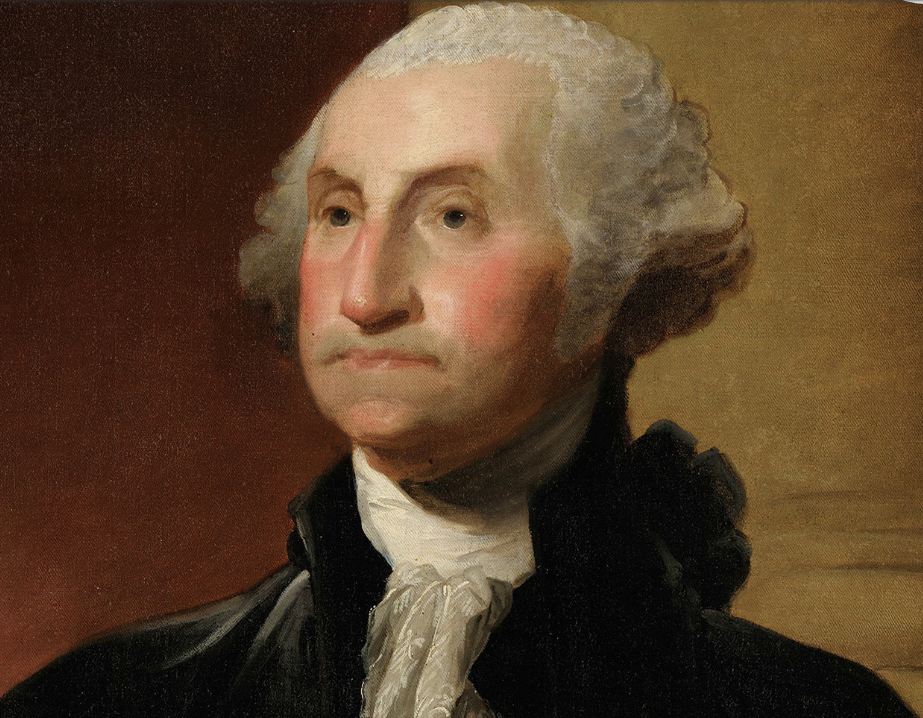
George Washington holds a singular place in American history as the nation’s first President and one of its most respected Founding Fathers. On April 30, 1789, he stood on the balcony of Federal Hall in New York City to take the oath of office, becoming the inaugural leader of the newly formed United States. In a letter to James Madison, he reflected on the weight of that moment, writing, “As the first of everything, our situation will serve to establish a precedent. It is devoutly wished on my part that these precedents may be fixed on true principles.”
Early Life and Education
Born in 1732 in Westmoreland County, Virginia, Washington grew up in a prosperous planter family. From an early age, he absorbed the education, discipline, and moral standards expected of an eighteenth-century Virginia gentleman. He developed a keen interest in both the military arts and western land exploration — two pursuits that would later shape his life’s course.
At sixteen, Washington assisted in surveying the Shenandoah Valley for Thomas, Lord Fairfax, gaining firsthand experience in frontier life. In 1754, he received a commission as lieutenant colonel in the Virginia militia and soon found himself engaged in the first clashes of what became the French and Indian War. The following year, while serving as an aide to General Edward Braddock, he narrowly escaped death when four bullets pierced his coat and two horses were shot from under him.
Life at Mount Vernon
Following the war, Washington returned to civilian life. From 1759 until the onset of the American Revolution, he managed his Mount Vernon estate and served in the Virginia House of Burgesses. His marriage to Martha Dandridge Custis, a wealthy widow, provided both companionship and additional prosperity. Although content with his role as a gentleman farmer, Washington grew increasingly frustrated with British trade restrictions and taxation. His letters and speeches from this period reveal a measured but firm resistance to British policies.
Commander in Chief of the Continental Army
In 1775, as tensions with Britain erupted into open conflict, the Second Continental Congress appointed Washington as Commander in Chief of the Continental Army. Taking command of poorly trained and ill-equipped troops in Cambridge, Massachusetts, he embarked on a military campaign that would last six difficult years.
Washington adopted a strategy of endurance rather than direct confrontation, recognizing that avoiding decisive defeat was key to eventual success. “We should on all occasions avoid a general action,” he wrote to Congress, emphasizing patience and calculated engagement. His perseverance paid off in 1781, when — with vital support from French forces — he secured the surrender of British General Cornwallis at Yorktown, effectively ending the war.
Shaping a New Nation
After the Revolution, Washington longed for retirement at Mount Vernon. However, he soon recognized that the fledgling nation under the Articles of Confederation lacked cohesion and authority. His influence proved instrumental in convening the Constitutional Convention of 1787, which produced the framework of government still in use today.
When the new Constitution was ratified, the Electoral College unanimously elected Washington as President. During his two terms (1789–1797), he defined many aspects of the executive office while respecting the separation of powers outlined in the Constitution.
In foreign affairs, Washington pursued neutrality. As war broke out between Britain and revolutionary France, he balanced the conflicting views of his cabinet — Thomas Jefferson’s sympathy for France and Alexander Hamilton’s preference for Britain — by maintaining an independent stance designed to protect the young republic’s stability.
Farewell and Legacy
By the end of his second term, Washington was weary of partisan divisions. In his Farewell Address, he warned against excessive political factionalism and cautioned the nation to avoid “permanent alliances” with foreign powers. These principles would guide American diplomacy for generations.
Washington retired to Mount Vernon in 1797 but lived only a few years longer. He died on December 14, 1799, after a brief illness. The news of his death brought profound sorrow throughout the country, and national mourning lasted for months.
More than two centuries later, George Washington remains a defining symbol of leadership, integrity, and service — an enduring reminder of the ideals upon which the United States was founded.