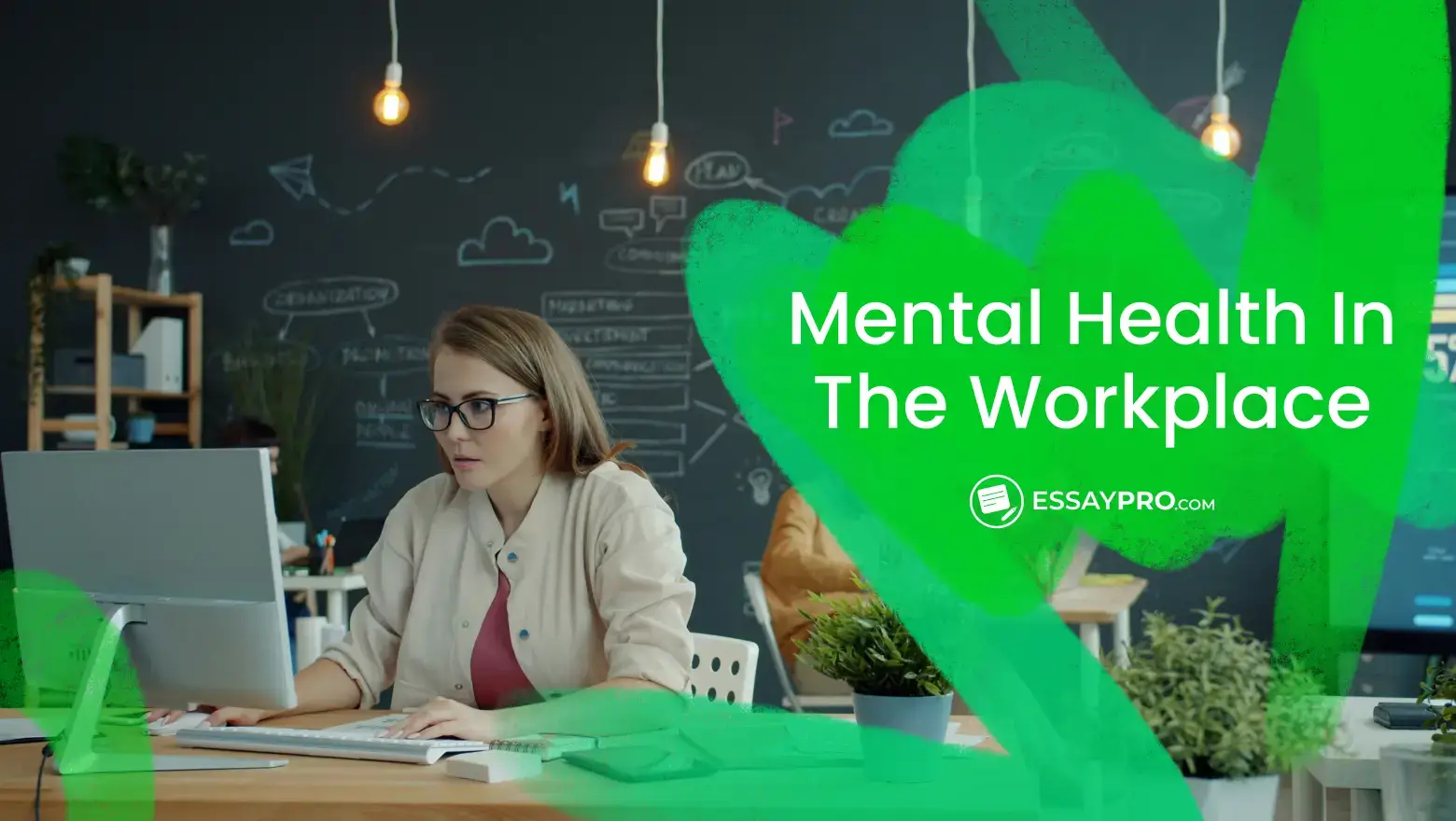
Half of U.S. workers report moderate to severe burnout, depression, or anxiety. The number in the 2025 Mental Health at Work Report by Mindshare Partners is, to say the least, surprising for something this serious. You can’t attribute that number to a “struggling minority” because it’s already half the workforce. Half of the people clocking in and sitting through meetings who have to deal with real issues and still get the work done.
After seeing that number, anyone will agree that this is an issue worth looking into. That’s why, in this article will talk about both the current mental health in the workplace and what students about to enter the workforce should expect.
Why Mental Health at Work Is a Growing Concern?
.webp)
A lot of workplace stress doesn't actually start at work. APA's latest Stress in America survey, conducted online by The Harris Poll among more than 3,000 U.S. adults, found that 62% name societal division as a significant source of stress in their lives. Loneliness runs right alongside it. Half of U.S. adults report:
- Feeling isolated from others (54%)
- Feeling left out (50%)
- Lacking companionship (50%)
Often or sometimes, the prevalence of these feelings suggests that disconnection has become the baseline condition for the U.S. workforce. None of this stays contained once someone walks into the office. Mental strain and physical symptoms tend to show up together, and treating one while ignoring the other rarely works. This is why workplace mental health has become such a pressing concern, since people spend most of their waking hours at work.
How Poor Mental Health Affects Job Performance?
The productivity numbers are jarring. A study from Berkeley gives us these stats:
The numbers in the table are observable, but we should not forget what isn’t so easily noticeable. An employee can sit through a meeting and send a follow-up email, and, generally, do everything that’s required of them without being fully present. That is the breeding ground for costly mistakes. And let’s talk about creativity, too, because employees struggling with mental health need more effort to complete creative tasks, spending 23% more energy than peers without such struggles. The upside, on the other hand, showed that 80% of treated employees report better effectiveness and satisfaction with mental health at work.
Why Should Students Care?
According to the American College Health Association's Spring 2024 survey, 76.4% of students report experiencing moderate or high levels of stress within the last 30 days. Add a part-time job to that mix, and the exhaustion compounds fast. Skip sleep to finish an assignment, pick up an extra shift for rent, repeat. That cycle doesn't stay behind in college. Mental health in the workplace often starts as a habit students built years earlier, just with higher stakes attached.
What Employers Are Doing to Promote Mental Health?
.webp)
Workplaces already have what it takes to help. They run on existing structures, built-in support networks, and data systems that can track patterns most people miss on their own. That infrastructure just needs to be pointed at mental health instead of only productivity.
Here's what that looks like:
- Screenings to catch depression, anxiety, or burnout before they escalate
- Low-cost mental health coverage built into standard health plans, not offered as an add-on
- Coaching and counseling access through EAPs or outside providers
- Workshops on stress management, resilience, and communication
- Quiet spaces for employees to decompress during the workday
- Manager training to recognize distress and respond without overstepping
None of this requires reinventing the company from scratch. Employee mental health improves fastest when these pieces work together instead of existing as a single, forgettable benefit buried in an onboarding packet.
Real Examples: Companies Supporting Employee Mental Health
Reading about these initiatives in the abstract only gets you so far. Seeing which companies actually put money and structure behind them tells a more convincing story, and the mental health in the workplace statistics behind these programs back that up.
- Starbucks partnered with Lyra Health to give all partners, including part-time staff, 20 free therapy sessions annually, removing a major cost barrier to care.
- Unilever trained 4,000 employees worldwide to serve as "mental health champions," staff who watch for signs of struggle among peers and connect them to support.
- Microsoft expanded its EAP and folded mental health support directly into its Viva platform, offering 24/7 on-demand therapy through secure apps, with options for different languages and time zones.
- American Airlines built its EAP to cover stress, anxiety, depression, and work-life balance, alongside support for substance misuse and family concerns.
- Google encourages managers to build well-being check-ins directly into regular one-on-ones, setting aside 5 to 10 minutes just to ask how someone is actually doing.
What stands out across these five isn't the size of the budget behind each program. It's the consistency. None of these companies treats mental health support as a one-time initiative rolled out during Mental Health Awareness Month and forgotten by June. They built it into daily operations, which is exactly what makes it stick.
What Students Can Learn From These Examples?
Campus counseling is your version of an EAP, minus the corporate branding. It's already covered by tuition, confidential, and sitting there mostly unused. The "quiet space" idea scales down easily, too. During finals, that's just an empty classroom or a corner of the library where nobody's talking for twenty minutes. And normalizing stress talk matters more than it sounds like it should. The strongest employee mental health programs work because admitting you're struggling stops being weird. That habit is worth building now, long before there's an HR department involved.
Strategies for Managing Mental Health and Stress
Fixing this doesn't fall on one group. It takes several moves at once, and here's roughly what that looks like for each.
- Healthcare providers: Screen for depression and anxiety during regular visits instead of waiting for a specialist referral, and treat mental and physical symptoms as connected rather than separate appointments.
- Researchers: Track which interventions actually hold up years later, not just in the first six months, and pay closer attention to groups that get left out of most studies, working students among them.
- Community leaders: Build support networks that don't require a formal diagnosis to access, and keep the conversation about mental health going year-round instead of during one designated week.
- Government: Push for insurance parity so mental health coverage costs the same as treating a physical injury, and fund programs directly rather than leaving the responsibility entirely to individual employers or schools.
- Employees: Actually use the benefits already available, therapy coverage, EAPs, mental health days, since most of them go untouched. Set boundaries around work hours where that's realistic, and flag a problem to a manager before it turns into something bigger.
None of these work well in isolation, honestly. A funded government policy without programs to back it up doesn't move the needle much, and an employee who wants help but can't reach it hits the same wall as someone with no benefits at all. Progress here looks less like one big fix and more like five separate pieces finally lining up.
Strategies Students Can Start Using Today
Swap "employer" for "campus," and most of the same logic applies, just at a smaller scale.
Start with what's already available. Campus counseling exists, even if the wait can run a few weeks, since the average counselor carries a caseload of around 120 students. Book early instead of waiting until things feel urgent. Your study schedule should be matched to your real energy levels. And don't treat sleep and food as optional during finals. Skipping both feels productive for about a day and then costs you the rest of the week.
Peer support does more work than people give it credit for, too. A short conversation with someone drowning in the same exam can shift more than an hour alone with a textbook. When the stress gets loud, something as small as a short walk or a few minutes of slow breathing between study blocks is usually enough to reset. None of this needs a full lifestyle overhaul, just habits small enough to actually stick.
Does the College Prepare Students for Workplace Mental Health Realities?
Not entirely, though it gets close. Campus counseling and workplace EAPs actually run on similar logic: free or low-cost, confidential, and available before things get bad enough to require a crisis intervention. The difference is scale and structure. A college counseling center might have a waitlist and a caseload north of 100 students per counselor, while a well-funded EAP often connects students to a provider within days. Neither one is perfect for mental health safety, but the muscle one builds using one carries directly into the other.
That's the part worth paying attention to. Learning to recognize your own stress signals, ask for help before burnout sets in, and use a support system that already exists rather than white-knuckling through a semester, none of that resets after graduation. It just changes buildings. Students who practice these habits in college tend to walk into their first job already knowing how to spot the warning signs instead of learning them the hard way, usually around month three of a new job when the adjustment period wears off, and the real workload hits.
Final Thoughts
Student life and work life aren't really two separate chapters. They're the same continuum, just with different deadlines attached. The stress you feel over a midterm and the stress a coworker feels over a quarterly deadline come from a similar place; workload piling up faster than your capacity to handle it feels unsustainable.
Building stress-management habits now means you're not starting from zero the day you get your first offer letter. Use the campus resources sitting in front of you. Talk to people instead of carrying everything alone. None of this requires a personality overhaul.
And honestly, managing your academic workload well now is closer to a career skill than most students realize. Nobody hands out a diploma for it, but the ability to plan realistically, ask for help early, and protect your own bandwidth will matter just as much in your first job as it did in your last final exam.
FAQs

What Are the Most Common Mental Health Issues in the Workplace?
What Are Signs of Poor Mental Health at Work?
What to Do if You Can't Work Because of Mental Health?
How Can Students Prepare for Workplace Mental Health Challenges before Graduating?

Sopho Miller
is an experienced content writer who specializes in digital marketing, business, and academic topics. With a Master’s degree in Digital Marketing, she combines her expertise with a practical approach to create clear, engaging, and educational content. She crafts detailed guides and resources that support students in their academic journey. Outside of work, Sopho stays current with the latest industry trends and regularly attends workshops to further sharpen her skills.