- 71% of hiring managers consider social profiles an effective screening tool.
- Inappropriate photos or videos are behind about 50% of rejections.
- A complete LinkedIn profile can raise your odds of an interview by 71%.
The last strong candidate you know who never got a call back probably has no idea why they got rejected. The resume was fine, and the interview, seemingly, went well, too. Then… nothing. Not even a reason stated in the rejection email. What is often behind “We decided to go with another candidate” comes from the employers checking social media and treating it now as a routine part of hiring. Profiles and posts people often forget about can decide things for you well before an offer is drafted.
In this piece, we’ll break down what steps companies go through to research the applicants’ digital footprint, how they define the red flags that end candidacies, and how social media and job loss connect even after you land the role.
How Employers Use Social Media During Hiring
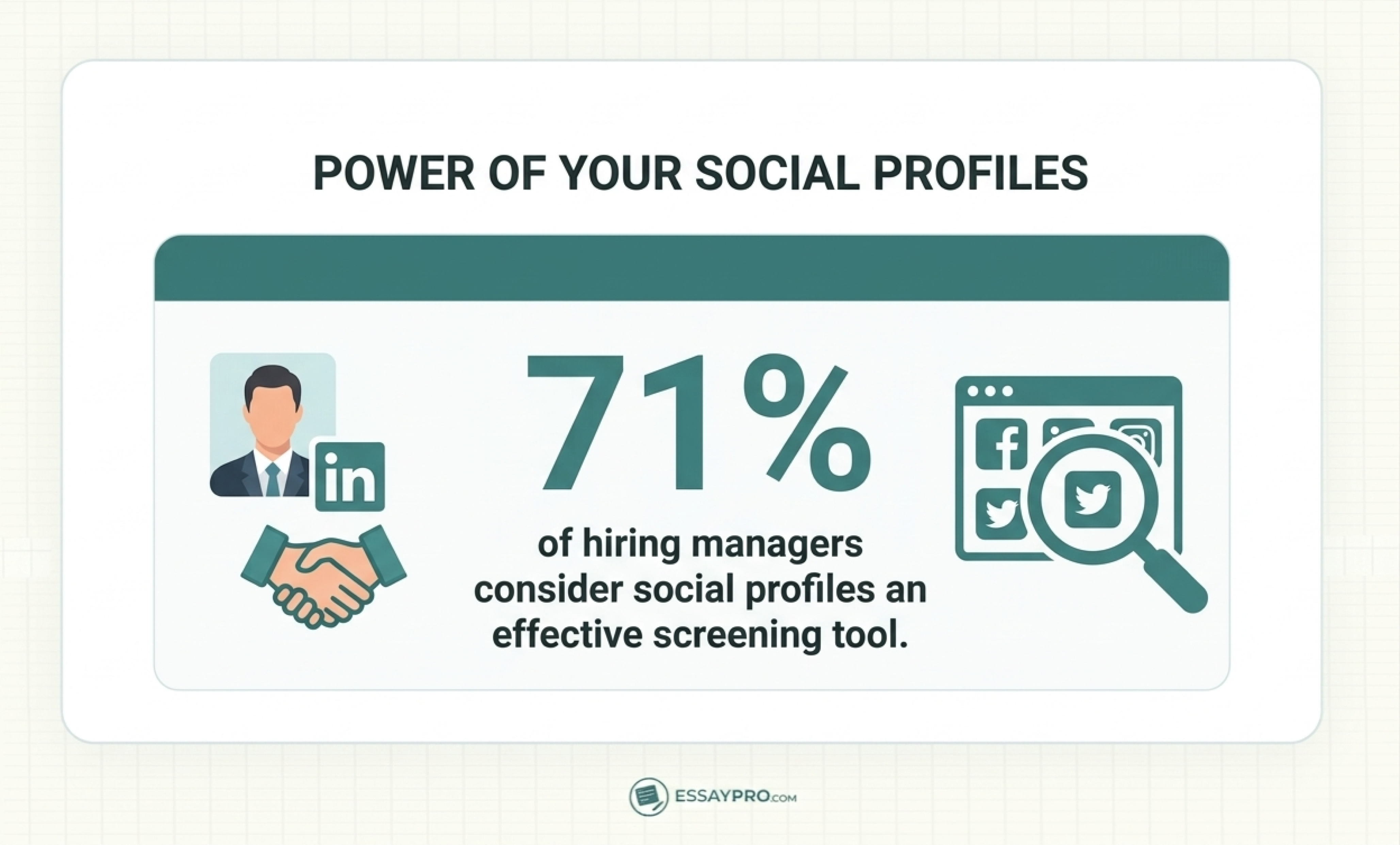
Social media has become the first place most companies go to when they want to size up an applicant. The process became especially routine by 2025, although it was still the case a few years earlier. SHRM's 2025 Talent Trends report put this type of screening at the top of the recruiting toolkit, even ahead of pay raises and job-board ads. And the numbers also back this up by saying that 71% of hiring managers consider social profiles an effective screening tool. The logic behind employers using social media for hiring is not mysterious, because when you’re a recruiter with forty applications and one afternoon, all you want are answers to these three questions:
- Does the person online match the person on paper?
- Would they fit in with the collective without tension?
- Is there anything the resume politely left out?
The opposite problem is just as real. It’s instantly suspicious if you show up literally nowhere online. A blank footprint, for a hiring manager in 2026, is just another gap that needs explaining.
What Employers Look for on Your Social Media
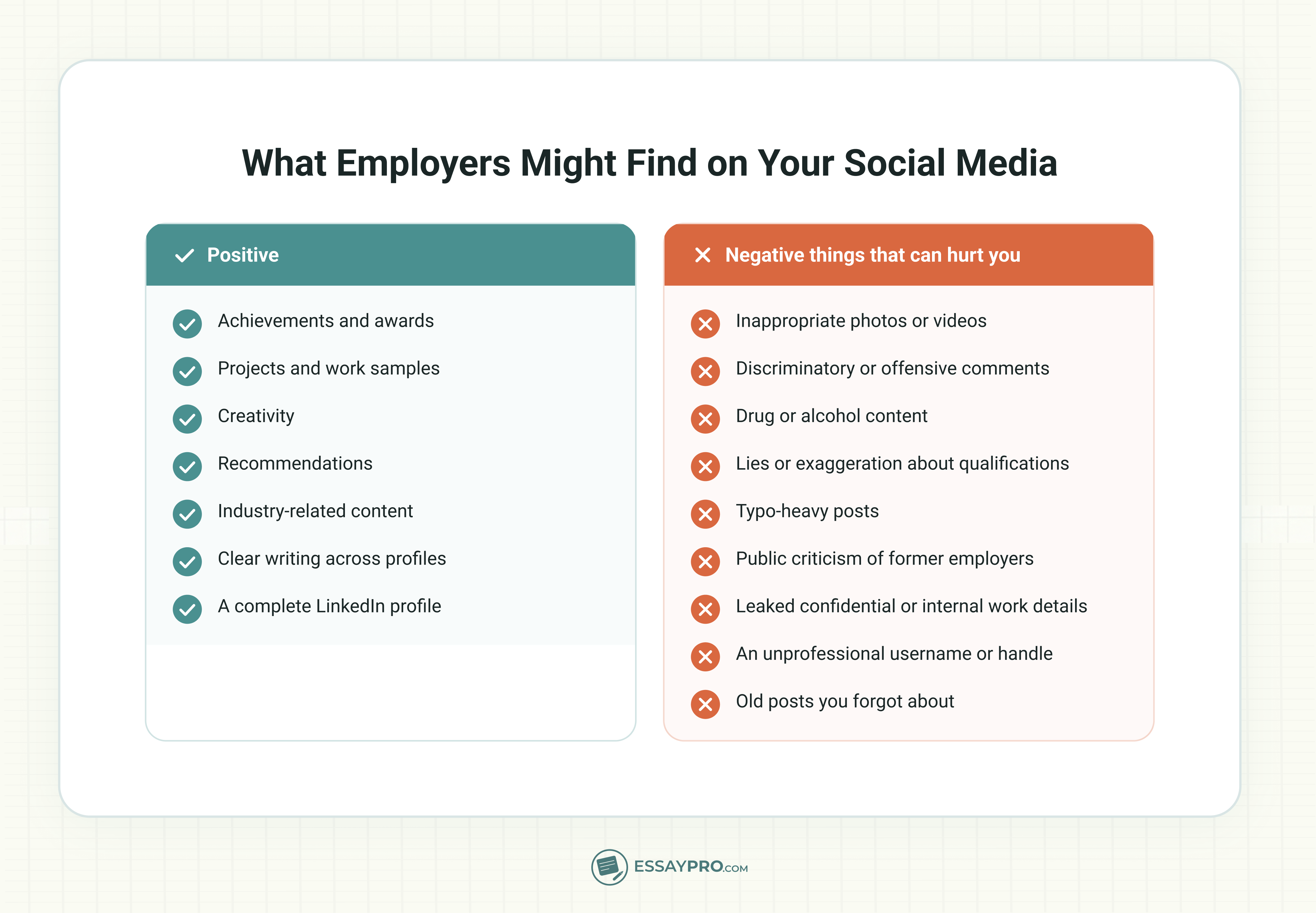
Is there anything concrete that employers look for on your profile, or is your general personality all they want to see? Social media screening, in plain terms, is simply an employer following the public trail you leave online. That includes posts and photos, and, unfortunately for some, even the offhand comments. A lot of what they find works in the candidate’s favor, so it’s not all bad news. Actually, more than half of employers have come across posts that confirmed someone's qualifications, and 42% pay attention to how a person talks to others in public, especially for customer-facing jobs. The wins look like this:
- Proof of the experience the resume claims
- A professional tone
- Writing and replies that show communication skills
- A personality that reads as easy to work with
The losses are blunter. Behind the rejections, the reasons are the following:
- Discriminatory content
- Bad-mouthing former bosses
- Lies about credentials
A friend tags you at a bad moment, and that counts too.
Social Media Content That Can Hurt Your Job Chances
It is often just a single post that makes a recruiter move on or at least hesitate. Hesitation, in a stack of forty applications, is usually a conversation-ender right away. CareerBuilder's data lines up the biggest social media red flags for employers by how often each one gets someone cut:
Those four are the main reasons applicants end up not hired because of social media, but a handful more still work against applicants despite showing themselves less often on the charts:
- Drug or alcohol content reads as shaky judgment to most managers, fair or not.
- Then there's the typo-riddled post, which answers the communication question before you have said a word in the interview.
- A leaked client name? An internal screenshot? Either one marks you as a confidentiality risk on the spot.
- And the username nobody thinks about, the jokey handle from years ago, undercutting an otherwise solid profile.
Time does not clean any of this up for you. Old public posts stay findable for years, and scraping tools surface them in seconds, so a good number of people end up not hired because of forgotten social media posts. So if you want to fix this, search your own name in a private tab before you apply, then delete or lock down anything you would not want read aloud in the room.
Social Media Content That Can Help You Get Hired
Recruiters look for confirmation as much as concern. 54% of employers turned up content that actually backed an applicant’s qualifications and moved the application forward. A professional social media presence hands them that reason to say yes. Here is what tends to do the work, and why each one registers:
Achievements and awards are the simplest start because they tell a hiring manager the resume was not made up. Then come the projects and work samples, and to simply say they are important would be an understatement because a real case study proves more than just describing what you do in an interview. Creativity also gets a second glance, if only because so much of any pipeline reads the same by the fortieth profile.
Recommendations lend you a slice of credibility from a name the recruiter already trusts. And industry-related content, if you post it with even loose consistency, tells people you keep up with your field.
A complete LinkedIn profile can raise your odds of an interview by 71%, and LinkedIn's own figures show verified skills lift hiring chances by 30%. The takeaway, in short, is to fill the thing out properly. If you do nothing else, do these three:
- Fill in every section, because the blank ones drop you down in recruiter search results and read as low effort before anyone reads a word.
- Skills should match the posting’s wording exactly, and verified ones count for more than a plain list.
- Every now and then, let a post actually touch your industry, so the hiring manager who clicks through finds a professional instead of a stranger.
How to Clean Up Your Social Media Before Applying for Jobs?
I don’t know a single person who, at least at some point, hasn’t looked up their own profile to imagine what a stranger would think about them. That’s what you should do before you apply to a job as well. Audit your social media presence and then repair whatever looks careless. You probably won’t need more than an hour to do these:
- Start with a private-tab search of your own name. Whatever ranks first is what a recruiter sees before they ever meet you.
- Old personal accounts should be set to a private setting.
- Take down any photo you could not calmly explain across a desk. The party stuff, especially.
- Tags are the sneaky ones, so you can untag yourself without guilt. You get tagged in a single post by your friend, and it’s instantly on your record without your say-so.
- Reread your public comments; anything cruel, discriminatory, or pointed at a former boss.
- A joke username has no place on a professional platform. Real name, everywhere it counts.
- Scrub every confidential work detail, even the ones from years back.
How to Build a Professional Online Presence?
An audit/cleanup keeps you in the running. But is that enough? You should be aiming to move up the shortlist, and that already requires a carefully curated presence. Don’t let that scare you, though, because it asks for less than one would fear. An online presence for job seekers means looking, to whoever checks, like a person worth hiring. Put your energy here:
- Complete your LinkedIn fully, since the half-empty profiles read as low effort and hurt your chances.
- Skills matter most when they match the posting word for word, so list and verify them where the platform allows.
- Post work you are proud of: a project write-up, a case study, a clean account of something you fixed.
- Every so often, a real take on your field marks you as someone who pays attention.
- Specific recommendations count for more, so ask two or three colleagues for details.
- Keep one steady photo and name across every platform, because consistency is its own kind of credibility.
Final Thoughts
None of this is complicated, though it does matter more than most people treat it. Employers are going to look you up, and what they find can help or sink you. The bad stuff is the usual bad stuff, easy enough to see coming. The good stuff you can actually build. And all of it lives on accounts you have more control over than you probably think. So tidy up what is there, put something worth finding in its place, and then go apply.
FAQs

Do Employers Check Social Media before Hiring?
Can Employers Reject You because of Social Media Posts?
Can Having no Social Media Hurt Your Chances?

Ana Ratishvili
Ana is a professional literary writer with a Master’s Degree in English literature. Through critical analysis and an understanding of storytelling techniques, she can craft insightful guides on how to write literary analysis essays and their structures so students can improve their writing skills.