
.webp)
Students run into the same wall again and again while writing. The ideas are there, but the wording starts looping. The same word shows up every few lines, sentences lose energy, and the writing begins to sound flat or rushed. This usually happens under time pressure, when there’s no space to pause and rethink phrasing. Finding another word in that moment feels harder than it should, even though the language already offers plenty of options.
EssayPro fits naturally into this gap. Along with tools like the essay grader, students can check clarity, spot repetition, and see where a stronger word choice would improve the overall flow before submitting their work.
How to Find Another Word for the Word You’re Using Too Often
When a word keeps showing up, the fix is not about sounding smarter. It’s about keeping your meaning clear while giving the sentence some breathing room.
- Use a thesaurus: Websites like EssayPro, Merriam-Webster Thesaurus, or Thesaurus.com let you see a word list. The list helps you compare options instead of guessing from memory.
- Read the sentence around the word: A single word can signal different ideas depending on context. The sentence usually tells you which meaning matters, and that meaning determines the right synonym for situation.
- Keep the grammar steady: A good replacement should slide into the sentence without forcing a rewrite. If the structure breaks, the word is doing the wrong job.
- Check real usage: Example sentences show tone and formality fast. If the word feels awkward when read out loud, it probably does not belong in an essay.
For additional writing practice and topic ideas, read our guide on opinion writing prompts.

Essays Due Soon?
Hand the hard part to expert sand get back a polished, ready-to-submit paper on time!

Synonym Examples for Commonly Repeated Words
Below, you’ll find grouped synonym lists for common words students repeat in essays, each section offering practical alternatives you can use right away without changing meaning or tone.
For students working on longer assignments, reviewing a book report example can also help highlight where repeated wording tends to appear.
Another Word for Important
- significant
- notable
- meaningful
- consequential
- weighty
- prominent
- noteworthy
- influential
- momentous
- substantial
Another Word for Critical
- decisive
- pivotal
- severe
- high-impact
- dire
- acute
- severe
- sensitive
- consequential
- crucial
Another Word for Crucial
- key
- central
- indispensable
- fundamental
- core
- linchpin
- mission-critical
- make-or-break
- high-stakes
- overriding
Another Word for Essential
- required
- mandatory
- intrinsic
- integral
- requisite
- basic
- elemental
- foundational
- nonnegotiable
- compulsory
Another Word for Vital
- lifesaving
- life-or-death
- high-priority
- paramount
- cardinal
- principal
- primary
- sustaining
- mission-essential
Another Word for Necessary
- unavoidable
- inevitable
- needed
- called-for
- obligatory
- warranted
- justified
- demanded
- inescapable
- prerequisite
Another Word for Urgent
- pressing
- immediate
- time-sensitive
- imminent
- exigent
- critical
- high-alert
- emergency
- swift
- Expedient
Another Word for Imperative
- binding
- commanding
- nonoptional
- authoritative
- peremptory
- categorical
- directive
- compelling
- prescriptive
- mandatory
Another Word for Because
- since
- as
- due to
- owing to
- on account of
- given that
- resulting from
- stemming from
- by reason of
- in light of
- attributable to
Another Word for But
- however
- yet
- still
- nevertheless
- though
- except
- instead
- whereas
- alternatively
- on the contrary
Another Word for However
- nevertheless
- nonetheless
- still
- even so
- by contrast
- on the other hand
- that said
- all the same
- yet
- conversely
Another Word for For
- regarding
- concerning
- intended for
- meant for
- in favor of
- on behalf of
- with respect to
- aimed at
- related to
- as for
Another Word for Good
- effective
- positive
- useful
- beneficial
- solid
- favorable
- reliable
- sound
- valuable
- constructive
- competent
- well-made
Another Word for Experience
- background
- exposure
- practice
- knowledge
- expertise
- familiarity
- skill set
- hands-on work
- track record
- training
- professional history
Another Word for Help
- assist
- support
- aid
- guide
- facilitate
- back
- reinforce
- lend a hand
- contribute
- bolster
- enable
Another Word for Also
- too
- as well
- additionally
- further
- moreover
- likewise
- along with that
- in addition
- besides
- similarly
Another Word for Ensure
- guarantee
- confirm
- secure
- make certain
- verify
- establish
- safeguard
- see to it
- reinforce
- uphold
- lock in
Another Word For Common Words: PDF List
This downloadable PDF provides a comprehensive table of practical synonyms, available for free use. When a word starts repeating, you can open the list, find a better option fast, and keep writing.
Why Finding Another Word Matters in Writing
Using synonyms helps writers make small changes that improve readability without rewriting entire sentences. The list below explains where better word choices make the biggest difference.
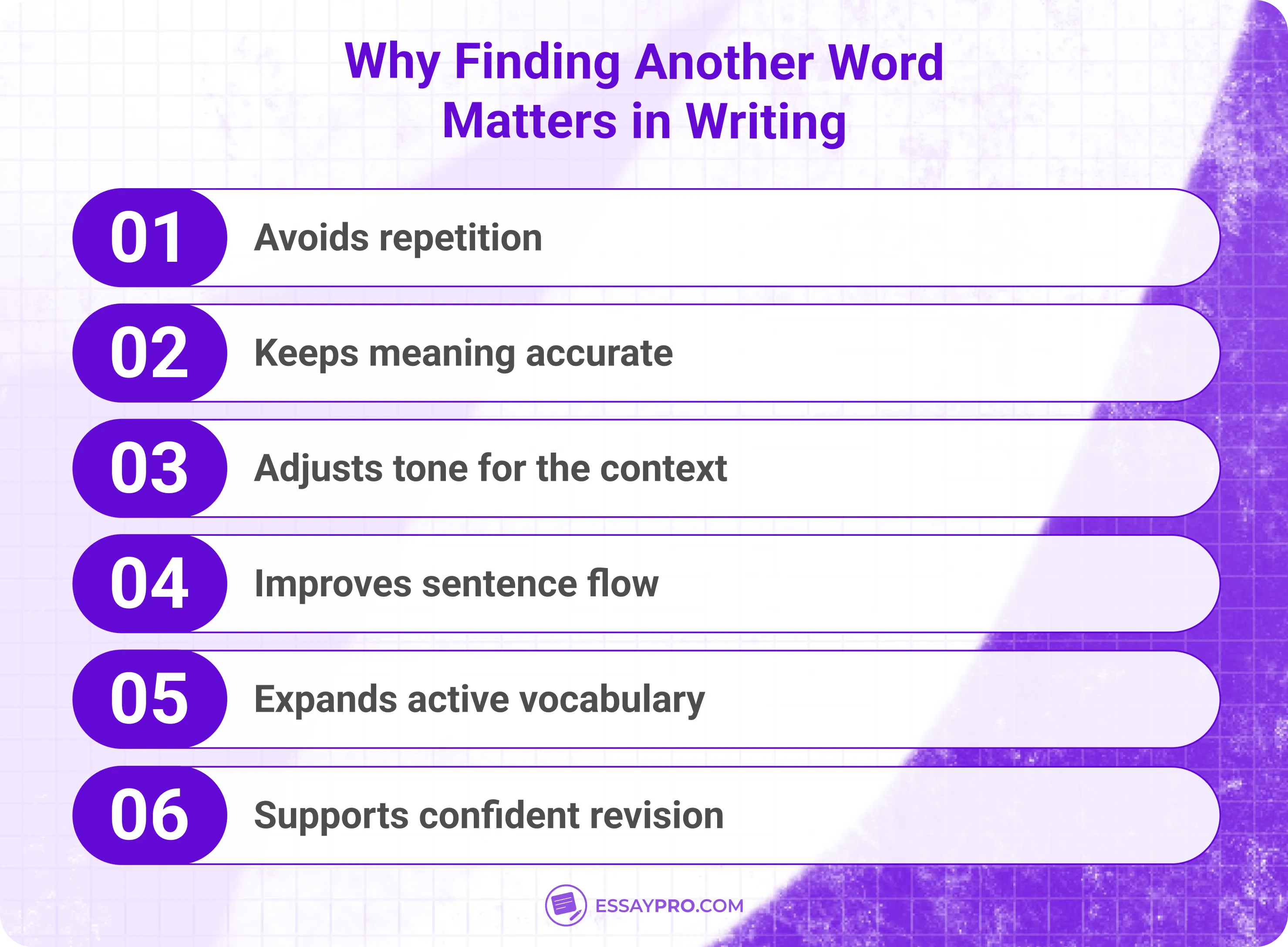
- Avoid repetition: Repeating the same word can pull attention away from your ideas and make your writing feel rushed or unfinished.
- Adjust tone: Some words sound formal, others conversational. Synonyms help you match an academic, neutral, or informal tone as needed.
- Strengthen flow: Varied wording keeps sentences moving smoothly and prevents mechanical rhythm.
- Expand vocabulary range: Using synonyms helps you practice word choice naturally instead of forcing advanced language.
- Maintain meaning while revising: Good synonyms allow you to revise without altering the core idea of a sentence.
- Write with more confidence: Knowing you have options makes drafting faster and editing less frustrating.
Essays Due Soon?
Hand the hard part to expert sand get back a polished, ready-to-submit paper on time!
Final Thoughts
Finding another word becomes easier once you focus on meaning, context, and grammar instead of swapping words at random. Using synonyms with intent helps reduce repetition, sharpen clarity, and keep your tone consistent across an essay.
EssayPro supports this process with writing tools that help students review structure, word choice, and overall flow.
FAQs
What Else Can You Use Instead of “For Example”?
What Is Another Word for Because?
What Is Another Word for And?
What’s Another Word for Beautiful?
What Is Another Word for Sad?
What Is Another Word for Said?

Mariam Navrozashvili
She has a Master’s degree in English Literature and brings a deep understanding of storytelling, critical analysis, and language structure to her work. On EssayPro Blog Mariam writes guides on literary analysis, essay composition and language studies to help students improve their writing skills. In her free time she likes to read classic novels and discuss literary theory.

.webp)