
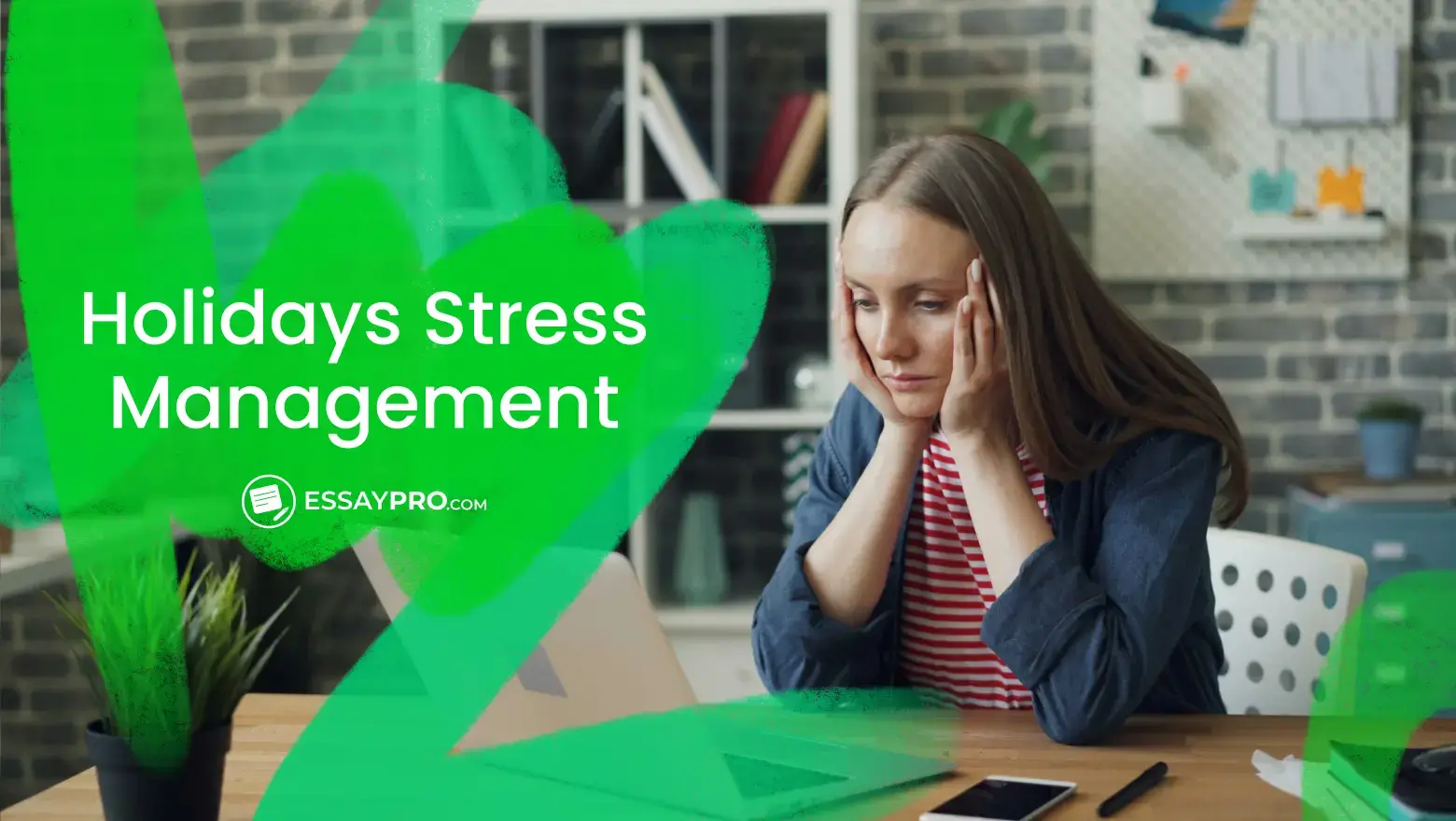
School vacations can seem nice, but for students, it is usually not that great. You have finals while trying to get home, and at the same time, have to deal with due dates and budgeting for the holiday season. Plus your family and lack of sleep. The American College Health Association's National College Health Assessment in the fall of 2024 showed that out of 30,000 students surveyed, 30% reported anxiety impacting their academic success. With over 75% of students getting less than 8 hours of sleep on weeknights. In addition, another ACHA study found that 76.4% of students reported moderate to high levels of holiday stress in the last 30 days.
So, here are some reasons why students feel overwhelmed during these times and what you can do about holiday stress management.
Why the Holidays Can Be Stressful for Students?
It feels like the holidays swoop in precisely when students are running on empty, adding more pressure rather than offering a break after exams.
- Higher likelihood to be stressed: According to the American Psychiatric Association's Healthy Minds poll, students aged 18-34 are more likely to say they will be stressed over the holidays, 49% versus just 27% for those 65 and older, a group that includes most college students.
- Near-universal stress: Nearly 9 in 10 students report stress during the holidays
- What stresses you the most: Money, not seeing loved ones and arguments are what the healthy mind poll showed to be the top reasons. All of these factors can cause a student to be more stressed over the holidays.
It's genuinely possible to feel both excited and overwhelmed at once; that combination is closer to the norm than the exception.
How to Manage Holiday Stress as a Student?
Holiday stress tips for students do not require a complete life overhaul, just a handful of realistic, easy-to-follow strategies that fit around finals, travel, and everything else already on your plate.
Acknowledge How You Feel and Reach Out
There's no requirement to feel cheerful just because the calendar says so. If the season feels heavier than festive, that reaction is valid, not something to push down or apologize for. Isolation tends to make holiday stress worse, and encouragement matters more than people realize: a Healthy Minds Study analysis published via the Association for University and College Counseling Center Directors' research network found that a friend's encouragement to seek help was associated with nearly five times higher odds of a student actually pursuing therapy or counseling. Talk to a friend, a family member, or someone in a supportive community you trust. You don't need a polished explanation of what's wrong; sometimes, just saying "this season is hard for me right now" is enough to open the door.
Set Realistic Expectations and Boundaries
The holidays don't have to be perfect, and chasing that standard is often what turns depression around the holidays from a passing low into something heavier. 43% of adults say holiday stress interferes with their ability to actually enjoy the season, and 36% say the holidays feel like a competition, pressure that often comes from self-imposed or comparative expectations rather than any real obligation. If your schedule or energy is already stretched thin, it's okay to say no to an extra gathering, a gift exchange, or a commitment that doesn't feel manageable right now. A simple, honest "I can't make that work this year" is a complete sentence.
Plan Your Time and Spending
If you plan ahead, you will be less stressed at the last minute. Money matters frequently emerge as a primary source of stress for Americans during the holiday season. Usually, it's being able to buy gifts. Establish a realistic financial plan for both gift-buying and trips. Then stick to that, and you won't have to worry about money. It’s wise to set aside distinct periods for social activities and for academic work. A basic framework of your upcoming tasks can take a lot of the guesswork out of things. Doing so can really cut down on worry.
Keep Basic Routines and Take Breaks
Having good habits around sleep, food, and exercise will become even more important over the holidays. That baseline is already fragile: more than 75% of students report getting less than 8 hours of sleep on weeknights, a pattern that tends to worsen rather than improve once travel and family schedules further disrupt normal routines. Once you add in all your travel and other things that happen over break, this number can only go down. Allow yourself some time to relax as well. Take a walk outside, listen to some music or read a book. Choose a screen-free way to look after your mental health during the holidays and have fun. Don't hesitate to make time for yourself while the holidays are underway.
Ask for Professional Support When You Need It
There are some symptoms that may warrant getting help beyond just taking care of yourself. If you feel depressed most of the time, have holiday anxiety all year round, can't sleep, have no hope for the future or are having trouble with day-to-day activities, you should seek help. There is nothing wrong with asking for help, and people are doing so more than ever. A peer-reviewed study showed that college students seeking mental health treatment increased by almost double from 18.7% in 2007 to 33.8% in 2016-2017. Your campus counseling center, family doctor or mental health provider are all good options to start, and the sooner you ask, the better.
How to Turn Your Break Into an Actual Reset?
Take some time to identify the specific stressors associated with the break. Perhaps it's financial worries, overbooked social calendars, family disagreements, or disrupted sleep patterns. Once you know what your stressor is, it's much easier to create a game plan for it and not fall into the same rut every holiday season.
- Identify what your top 2-3 stressors are: Get them on paper before the holiday period truly gets underway.
- Have some traditions you enjoy: Select a few activities you genuinely enjoy, and don't feel pressured to do them all.
- Don't feel obligated to do everything: You don't owe anyone a detailed explanation for declining; simply stating "I won't be doing that this year" is sufficient.
- Schedule time to do nothing: Dedicate moments to yourself, and ensure they're noted down as if they were a must-do event.
- Allow yourself some downtime: Having every moment of your break accounted for defeats the purpose of a break.
This thing people call the holiday blues often stems from a break that was not really a break at all. It's by safeguarding your personal time that you'll be able to come back to your next semester with renewed energy.
The Bottom Line
Students get stressed during the holidays. It is not something you did wrong. Given the pressure of finals, financial concerns, family obligations, and sleep deprivation, experiencing a mix of happiness and exhaustion concurrently is only to be expected. Take small steps, know how you feel and set boundaries. Finally, lay out a plan and make sure to allow yourself proper rest. This approach will lighten your holiday load.
FAQs

What Causes Students to Be Stressed During the Holidays?
How Can I Lower My Stress Over the Holidays?
Do I Feel Lonely During the Holidays?

Sopho Miller
is an experienced content writer who specializes in digital marketing, business, and academic topics. With a Master’s degree in Digital Marketing, she combines her expertise with a practical approach to create clear, engaging, and educational content. She crafts detailed guides and resources that support students in their academic journey. Outside of work, Sopho stays current with the latest industry trends and regularly attends workshops to further sharpen her skills.