
The oldest of Gen Z are pushing thirty now. They are all grown up, running teams, hiring people, and outright rewriting what a “good” job as we know it is supposed to look like. But beyond the surface-level information, what does current research really say about this generation and their role in the workplace? When scouring sources, several themes keep popping up.
Their mental health usually tops the list, followed by a mistrust of almost every institution. Then come the money troubles and the way they are behind most of their decisions, and finally, a real appetite for building something on their own is growing. The Gen Z workplace statistics covered in this article examine all four.
Who Gen Z Is and What the Latest Research Reveals
Born between 1997 and 2012, Gen Z lands at roughly 14 to 29 years old in 2026. It ranks as the most racially and ethnically diverse generation in U.S. history, per PRRI's June 2025 survey. A childhood online, a pandemic, and a brutal cost-of-living squeeze gave this cohort an outlook the data keeps confirming.
Mental Health Is the Defining Pressure
40% of Gen Zs experience at least some level of anxiety most of the time, and barely half call their well-being good, Deloitte's 2025 survey of 23,000+ reports. Burnout runs harsher still, hitting 72% of them against 38% of Boomers, per Seramount. But everything is not all bleak after all, there is one bright spot of this generation actually using the help, with 26% tapping a mental health benefit last month.
Trust Has Fallen to a Generational Low
The government is at the bottom of the list when it comes to trust from Gen Z. Only 19% of young Americans trust the institution to do right, and as for Congress, the number goes even lower, at a dismal 18%. Those numbers are also backed up by Gallup and Walton, so we know that it doesn’t come from a single independent research. Science alone earns the majority's trust, at 71%.
Financial Insecurity Drives the Decisions
Money fear has spiked. Deloitte clocked financial insecurity at 48%, an 18-point leap in one year, with over half of Gen Zs living paycheck to paycheck. On campus, it bites deepest: 59% of college students hit food or housing insecurity last year, the Hope Center found.
The Entrepreneurial Pull Is Real
Gen Z has decided to build instead. Some 51% of Gen Zers contemplated starting a business last year, nearly double the 27% adult rate, per LendingTree's read of Census data. Necessity, more than ambition, powers the trend.
Optimism Persists Through the Strain
Yet they have not given up. A striking 77% expect a great future, and 56% feel prepared, up 12 points since 2023, the 2025 Voices of Gen Z Study reports. Well-being, though, sank to a three-year low.
Where Gen Z Truly Divides in 2026
Analysts warn that age alone barely predicts behavior, and the sharpest 2025-2026 divide runs along gender. Young men trend toward conservative values. Young women move in a progressive direction, a gap wider than in any older generation and visible across many countries at once, per the Ipsos Generations Report 2025.
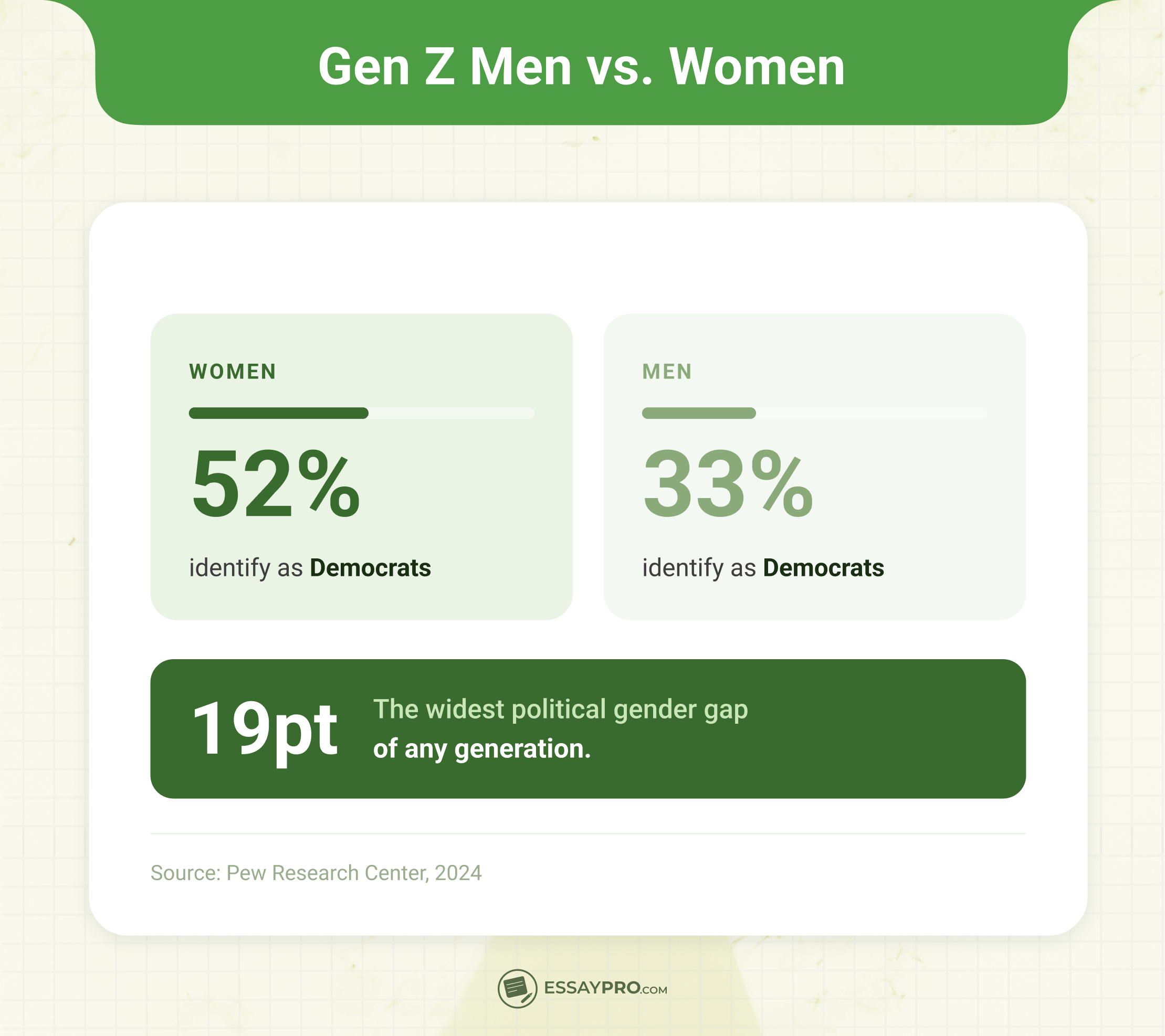
Roughly 25% of men aged 18 to 29 call themselves liberal, against 40% of women, according to Brookings' analysis. The partisan split, per NBC News polling with SurveyMonkey, is the widest of any generation:
A second divide runs by age. The 2025 Voices of Gen Z Study from Gallup and the Walton Family Foundation found 84% of the generation's students optimistic about their future, against 73% of its adults, whose well-being dropped to a three-year low. Older Gen Z has met the job market, rent, and debt firsthand. The teenagers have not reached that stage yet.
Hyperconnected, Yet Lonelier Than Any Generation Before
The pandemic isolated this generation at the worst possible moment, during the years when people form friendships, start jobs, and learn to read social cues. The cost has outlasted the lockdowns and Gen Z now reports the highest loneliness of any age group, a reversal of the old assumption that isolation belongs mainly to the elderly.
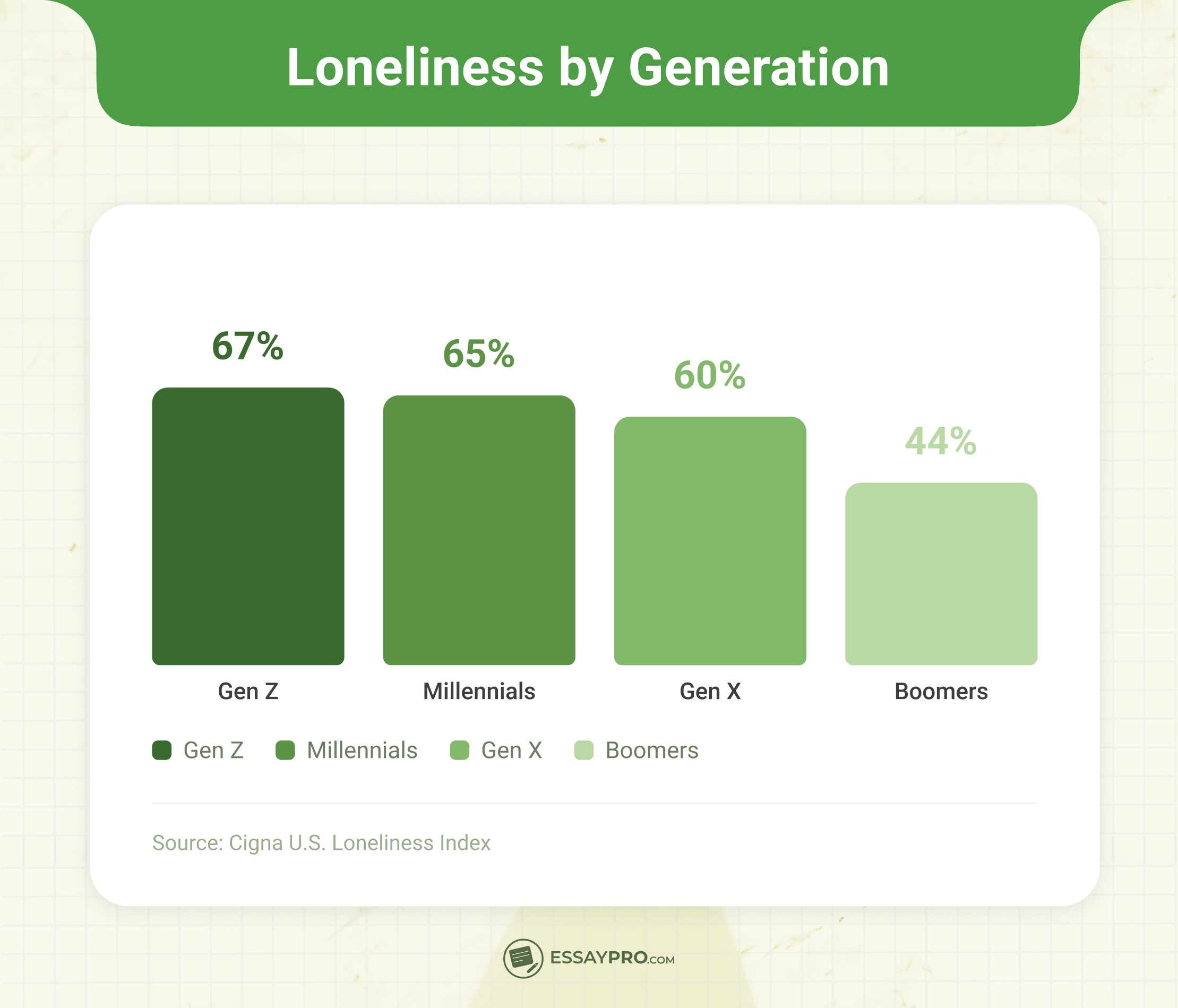
The 2025 Loneliness in America report from The Cigna Group, which surveyed more than 7,500 US adults, ranked loneliness by generation:
NBC News polling with SurveyMonkey additionally says that 29% of adults under 30 feel lonely or isolated most or all of the time, against just 8% of those 65 and older. Gallup's 2025 work found the strain heaviest among young men, one in four of whom report loneliness every single day.
Loneliness names the gap between the connection a person wants and the connection they feel, and it differs from social isolation, which measures actual contact. Gen Z has plenty of contact and still feels the gap. Of every figure in this piece, that gap is the one I would not have predicted a decade ago. For an employer, it points to a concrete opening: in-person onboarding, real mentorship, and teams that meet face to face give this cohort something their feeds do not.
What Gen Z Wants From Work Now
The Gen Z work-life balance statistics point one way. Balance has overtaken the old climb-the-ladder model, though cost-of-living pressure has pushed pay back up the list right beside it.
Randstad's 2025 research, which covered more than 26,000 workers across 35 countries, recorded a milestone: work-life balance passed pay as the top motivator for the first time in the survey's 22-year history. Among Gen Z, 76% put work-life balance ahead of salary, and 66% rate taking care of mental health as a high priority.
Purpose runs just as deep. Deloitte's 2025 survey found that 89% of Gen Zs call a sense of purpose important to their job satisfaction, 44% have quit a role that lacked it, and only about 6% name reaching leadership as their main goal. Values have real consequences here: roughly 40% have turned down an assignment or an employer over personal ethics.
Money has not gone away, though. The same squeeze that keeps 48% of Gen Zs financially insecure has made pay transparency their single most important job factor, cited by 44%. Ambition persists too. SurveyMonkey's 2025 "Gen Zen" study found 80% still aspire to senior leadership, just not at the cost of their health.
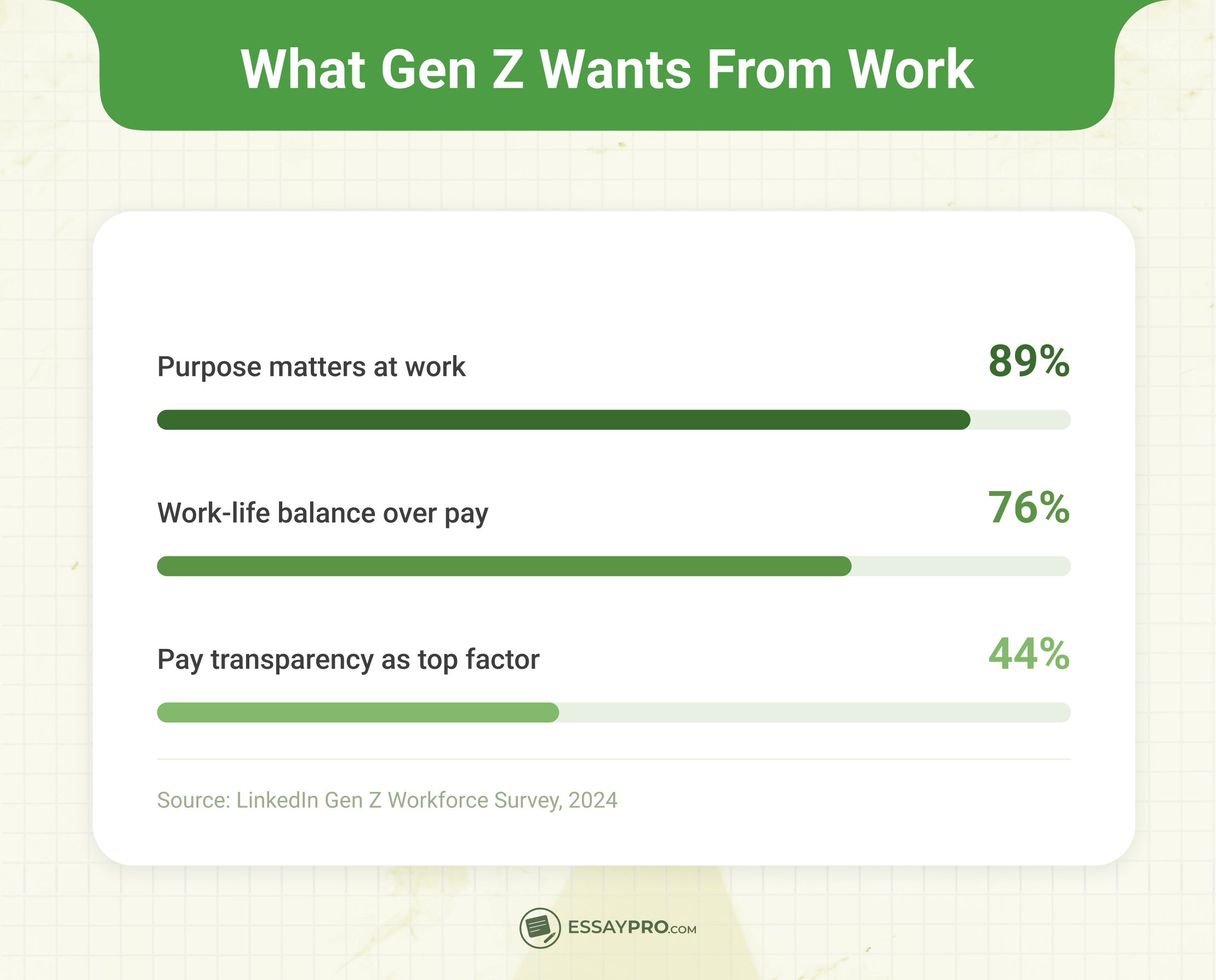
The employers must understand the message as soon as possible, that this generation wants flexible work, visible values, and fair, transparent pay all at once. Deliver one and skip the others, and they leave.
Using Their Voice at the Ballot Box and the Job Offer
The apathy narrative around Gen Z has always struck me as lazy, and the turnout numbers do not back it up. In 2024, 47% of eligible young Americans cast a ballot, a real climb from the 39% who voted in 2016, per CIRCLE at Tufts University. College students did better still, roughly 6 points above the overall youth rate, mostly because campuses make registering and voting easy. And nearly 50 million Gen Zers will be old enough to vote in the 2026 midterms.
What moves this generation is issues more than party loyalty. CIRCLE's 2026 survey of more than 5,000 young people found 43% claim no party affiliation at all. When they were asked what they would actually do about the causes they care about, respondents ranked their likely actions like this:
- Vote: 89%
- Talk with friends and family about the issue: 88%
- Sign a petition: 78%
- Join a boycott or protest: 57%
- Register other people to vote: 52%
That same drive to act on values follows Gen Z into the office. Their career development priorities are a form of expression. Deloitte's 2025 research puts development and learning among the top reasons they choose an employer, while roughly 40% have already turned down an assignment, a project, or an entire company over an ethical clash.
Climate Values Meet Cost-of-Living Reality
Climate stands at the core of how Gen Z describes itself. What 2026 keeps testing is what that self-image holds up to once rent and groceries compete for the same dollar. The concern is real and well documented, and so is the growing gap between what young people say and what they buy. A green premium, meaning the extra amount a shopper agrees to for sustainability, is the exact thing this generation has begun to trim.
Money is tight, although one habit escapes it: secondhand. Resale and thrifting cut cost and waste together, which is why used clothing has become an ordinary first option for a large share of the generation. For a brand, then, two rules follow:
- Prove the claim. Trust in green marketing is thin, and a vague sustainability badge convinces no one.
- Keep it affordable. A product that prices out its own buyer loses to the cheaper option beside it every time.
Implications and Advice for 2026
The central tension for employers is sharp. Companies are automating the very entry-level roles that give Gen Z its start, even as they compete to win that same generation's loyalty. Recent-graduate unemployment hit 5.6% in early 2026, among the highest readings in over a decade, per Stanford's SIEPR, and GMAC found that one in three employers now replace junior roles with AI. Four moves matter now:
- Rebuild the entry rung. Pair AI adoption with real training, because cutting junior roles hollows out your future talent pipeline.
- Pay fairly and openly. Transparency ranks as Gen Z's single most important job factor.
- Support mental health visibly. This cohort uses those benefits more than any other age group.
- Prove your values. Roughly 40% have walked away from an employer over an ethical clash.
Final Thoughts
Gen Z arrives anxious, financially squeezed, and skeptical of institutions, yet still hopeful about its future. This generation splits sharply by gender and life stage, wants balance, purpose, and fair pay all at once, and judges employers on their values. In 2026, AI is thinning the entry-level roles Gen Z needs most. Understand these workers, and you understand what comes next.


Ana Ratishvili
Ana is a professional literary writer with a Master’s Degree in English literature. Through critical analysis and an understanding of storytelling techniques, she can craft insightful guides on how to write literary analysis essays and their structures so students can improve their writing skills.