

Communication is about how we convey messages and understand others. You can use any subject that involves human communication to generate good topics. From interpersonal communication to culture, organizations and more, find one that you can dig into further and have a research question.
Here are over 250 communication research topics for 2026. They are broken down by category so you can find what best fits your needs. Make sure to choose a topic that lets you go in-depth and complete it within your time frame.
What is a communication research paper?
A communication research paper is an academic paper that investigates a specific question about how people, groups, or media create and share messages. It uses evidence, such as published studies, surveys, interviews, content analysis, or experiments, to answer that question and support an argument. Unlike a general essay on communication topics, it needs a focused research question, a method or review of existing research, and a clear conclusion. Papers can study face-to-face conversation, news and social media, workplace messaging, public speaking, or cultural exchange, depending on your course and level.

New topics in communication research for 2026
New forms of communication have come around to help us interact better. With these communications research topics, you'll be able to tackle unanswered questions and contribute fresh insights.
- How does disclosing AI authorship affect readers’ trust in news articles?
- Do people form parasocial bonds with AI chatbots the way they do with media personalities?
- To what extent do deepfakes change how audiences judge political messages?
- What makes short-form video effective for health education?
- How do recommendation algorithms shape the news people see and share?
- Why do some audiences avoid the news, and how can outlets respond?
- How have chat-based workplace platforms changed communication norms in hybrid teams?
- Do AI translation tools improve or flatten cross-cultural communication?
- Does sponsorship disclosure change how audiences trust creators?
- How does using voice assistants affect the way people phrase requests?
- Which visual cues lead people to believe or doubt misinformation?
- How do virtual reality meetings compare with video calls for building rapport?
- Do fact-check labels change what users share on social platforms?
- How do online communities manage conflict without face-to-face cues?
- Which channels work best when universities communicate with students?
Best topics related to communication
Pick a topic that you enjoy, and that is not too broad. Maybe something that you already know about. A good starting point could be anything from AI and current happenings to social media or politics. Then choose one category within that subject. You'll find a variety of communication topics organized into different categories. This will allow you to browse through each one and choose a topic that you can find enough information about.
AI and communication research topics
AI will become a go-to for writers needing assistance and for those wanting to fact-check their prose. These points all circle back to us, how we deal with AI, and what it might mean for our common routines.
- How do students use generative AI in group writing projects, and how does it affect collaboration?
- Can AI-generated customer service replies match human empathy in tone?
- What do patients expect from chatbots in health care conversations?
- How does AI-assisted email drafting change workplace politeness norms?
- Do automated captions improve comprehension for deaf and hard-of-hearing viewers?
- How do users describe privacy concerns when sharing personal details with AI assistants?
- How do names and voices given to AI assistants shape trust in them?
- Which language patterns make AI-written text easy to spot?
- How clearly do teachers communicate AI policies to students?
- Does using AI writing tools change people’s sense of authorship?
- How do job applicants react to AI-led interview screening?
- Which strategies help organizations explain automated decisions to customers?
- How does prompt wording change the answers a chatbot gives to the same question?
- Can AI summaries distort the meaning of long texts?
- How do collaborators negotiate whether to disclose AI use in creative projects?
If you're short on time, ask ‘write a research paper for me’ with expert support for research, writing, and editing.
Mass communication research topics
With mass communication, you can choose any medium, whether it's television, movies, radio, commercials, etc. Then find your target audience and see what effects that message may have on them.
- How has streaming changed the way families choose what to watch together?
- What role does advertising play in shaping body image ideals?
- How do public service announcements change health behavior?
- Why do certain news stories go viral across media platforms?
- How do television crime shows shape public beliefs about policing?
- What makes a documentary persuasive to mainstream audiences?
- How does product placement in films influence viewers’ brand attitudes?
- How do podcasts build audience loyalty?
- What effects does media violence have on viewers of different ages?
- How do radio stations stay relevant in the age of streaming?
- How do celebrity endorsements affect charity donations?
- How do magazines and websites cover the same event differently?
- How do cultural differences shape the reception of international TV series?
- What can agenda-setting theory tell us about today’s media cycles?
- How do crisis broadcasts influence public behavior during emergencies?
Journalism communication research topics
Journalism can be about how stories are reported. Find a story that interests you or maybe a news station, and research how they decide what stories to report and what affects may the readers/viewers take from that story.
- How do newsrooms decide which stories earn front-page placement?
- What ethical challenges do journalists face when reporting on survivors of trauma?
- How has the decline of local newspapers changed civic knowledge?
- How do reporters verify user-generated footage during breaking events?
- Which framing choices shape how news outlets cover protests?
- How do solutions journalism stories affect audience engagement?
- What role do anonymous sources play in investigative reporting today?
- How do data visualizations help or hurt the reader's understanding of statistics?
- How do newsrooms handle corrections, and do readers notice them?
- How do freelance journalists manage safety and income risks?
- Does constructive news reduce readers’ stress compared with negative news?
- How do journalists use social platforms to find and cultivate sources?
- What makes headlines accurate yet engaging?
- How do press freedom laws affect the way journalists report on government?
- How do journalists cover mental health without causing harm?
Social media communication research topics
Research on social media will address the underlying causes of people's online behavior. There will be certain guidelines and rules that your research should follow. Identify one social media platform and gather information about how people behave on it.
- How do platform features, like streaks, affect teenagers’ messaging habits?
- Why do people overshare personal stories on social platforms?
- How does social comparison on image-based apps affect self-esteem?
- What makes online challenges spread so quickly?
- How do brands respond to public criticism on social media?
- How do users signal identity through profile pictures and bios?
- Why do group chats become sources of social pressure?
- How do emojis change the tone of workplace messages?
- Which communication strategies help activists build online movements?
- How do online hate and harassment affect which voices stay active?
- How do creators handle audience feedback and burnout?
- How do people use private features, like close-friends lists, to manage their image?
- Do live streams create stronger audience bonds than recorded posts?
- How do nonprofits use storytelling on social platforms to build community?
- How do users decide when to post, share, or stay silent about sensitive topics?
Political communication research topics
Political communication studies political figures or politicians. This could be presidents/ politicians or political parties. Analyze one type of message they deliver to the public and ask yourself what effect it has on the people.
- How do candidates adapt their speeches for different audiences?
- What makes political slogans memorable?
- How do negative campaign ads affect voter turnout?
- How do politicians use storytelling to build credibility?
- How do televised debates shape voters’ impressions of candidates?
- How do local governments communicate with residents during emergencies?
- What role does humor play in political satire shows?
- How does government messaging shape public acceptance of new policies?
- How do press secretaries manage message control during crises?
- How do young voters learn about elections without traditional news?
- How do metaphors frame debates about immigration?
- How do political parties tailor messages to specific voter groups?
- How do citizens respond to apologies from public officials?
- Which rhetorical strategies do leaders use in speeches after national tragedies?
- How does media coverage of polls influence voter expectations?
If you’re managing multiple deadlines, choose to buy a research paper to receive professional academic assistance.
Business communication research topics
There are many topics you can research in business communication. You can research how businesses communicate with others. Maybe you could look at different types of communication businesses use and how they may affect their outcomes.
- How does email tone affect response time and cooperation among coworkers?
- Which meeting formats keep remote teams most engaged?
- How do customers judge a company after reading an apology email?
- What makes a business presentation persuasive to investors?
- How do cross-cultural teams adapt their writing in international emails?
- Why do employees hesitate to ask questions in team chat channels?
- How clearly do job postings explain workplace expectations?
- How do companies announce layoffs, and how do employees react to the message?
- How do business writing habits differ between younger and older employees?
- What role does small talk play in building client relationships?
- How do onboarding materials shape new employees’ sense of belonging?
- Which strategies help managers give constructive written feedback?
- How do call center scripts affect customer satisfaction?
- How do companies communicate sustainability goals without sounding like greenwashing?
- How does jargon in internal memos affect understanding among non-specialists?
Advertising communication research topics
The field of advertising communication presents a broad spectrum of research possibilities. How does it make us pay attention to certain things or want to purchase products? Analyze an advertisement and consider its message to you.
- How do emotional appeals compare with factual claims in ads for financial products?
- What makes a slogan stick in consumers’ memories?
- How do ads use humor, and when does it backfire?
- How does color influence perceptions of brand personality on packaging?
- How do ads aimed at children differ from those aimed at parents?
- What role does nostalgia play in modern ad campaigns?
- How do viewers react to ads that interrupt streaming shows?
- How do ads for the same product change across countries?
- How does scarcity language, such as “limited time,” affect purchase intent?
- How do audiences respond to ads that feature real customers instead of actors?
- Why do big-event commercials spark so much conversation?
- How do ads portray gender roles, and has this changed over time?
- How do ad-skipping habits change the design of video ads?
- How do cause-related ads affect brand loyalty?
- How effective are billboard messages compared with digital banner ads?
Public relations communication research topics
Public relations communication focuses on how organizations build trust and manage their image. Choose a type of organization or a situation, such as a crisis, a launch, or a community campaign, and examine the message and its effect.
- How do companies rebuild trust after announcing a data breach?
- What makes a press release get picked up by journalists?
- How do nonprofits shape public opinion on neglected causes?
- How do universities handle reputation crises, such as admissions scandals?
- How do CEOs’ public statements affect brand perception?
- What role does transparency play in crisis communication?
- How do small businesses build local goodwill through community events?
- How do spokespeople prepare for hostile interviews?
- How do cities rebrand themselves to attract tourists?
- How do companies respond when a product recall becomes public?
- How do sports teams communicate with fans after losing seasons?
- How do brand ambassadors influence public trust?
- How do press conferences differ from written statements in managing a story?
- How do organizations measure the success of PR campaigns?
- How do airlines communicate delays and cancellations to protect customer goodwill?
Organizational communication research topics
This topic covers how information is passed throughout an organization. From the highest levels down to peer-to-peer interactions. Pick one form of an organization or how it's communicated, and see if it has any effect on culture/morale, etc.
- How do formal and informal communication networks shape decision-making in large companies?
- How does an open-door policy affect employee trust?
- How do silos between departments affect information sharing?
- How do employees interpret organizational change announcements?
- How does an office layout affect conversation patterns?
- How do rumors spread in organizations, and how can leaders respond?
- How do nonprofit volunteers receive instructions from staff?
- How do mergers affect communication between employees from different company cultures?
- How do employee newsletters influence engagement?
- How do shift workers get information compared with desk-based employees?
- How do whistleblowing channels shape employees’ willingness to speak up?
- How do remote employees stay connected to company culture?
- How do performance reviews communicate expectations?
- How does storytelling shape organizational identity?
- How do family-owned businesses handle communication across generations?
Leadership communication research topics
Communication in leadership can go hand in hand. What are some ways leaders communicate with others? Whether it be leading a group, school or even during a time of crisis.
- How does a leader’s storytelling style affect team motivation?
- How do leaders communicate vision during times of uncertainty?
- What listening behaviors make leaders seem approachable?
- How do first-time managers learn to give difficult feedback?
- How do women leaders navigate expectations about communication style?
- How do leaders adapt messages for different generations in the workforce?
- How does a leader’s nonverbal communication affect credibility?
- How do student leaders communicate in campus organizations?
- How do leaders explain failure, and how do teams respond?
- How do leaders use humor to build team cohesion?
- How do coaches communicate under pressure during games?
- How do leaders balance transparency with confidentiality?
- How do military leaders communicate in high-stress settings?
- How do leaders praise employees, and which approaches work best?
- How do crisis leaders, such as mayors or hospital directors, keep teams calm?
Negotiations communication research topics
Negotiation communication examines how people persuade, bargain, and reach agreements. Choose a setting, such as hiring, sales, or conflict resolution, and look at how word choice, timing, and listening shape the outcome.
- How do opening offers influence final agreements in salary negotiations?
- How do negotiators use silence strategically?
- How does culture shape negotiation styles between countries?
- How do negotiators build rapport before bargaining?
- How does negotiating by email differ from negotiating face-to-face?
- How do framing choices change how an offer is perceived?
- How do mediators communicate in family disputes?
- How do labor union negotiators communicate with management and members?
- How do emotions, such as anger or empathy, affect bargaining results?
- How do negotiators handle deadlock?
- How do sales teams prepare for price negotiations with clients?
- How do gender differences appear in negotiation conversations?
- How do students negotiate roles in group projects?
- How do diplomats use language to save face in tense talks?
- How does asking questions change what negotiators learn about the other side?
Explore these marketing research topics for more ideas related to branding, advertising, and consumer behavior.
Health communication research topics
Health communication studies how health information is shared between providers, patients, and the public. Choose a group or setting, such as a clinic, campaign, or online forum, and ask how message design affects understanding and choices.
- How do doctors explain test results so patients understand them?
- What makes vaccine messages effective for hesitant parents?
- How do patients use online forums to share health experiences?
- How do hospital discharge instructions affect patient follow-through?
- How do health apps communicate progress and motivation?
- How do cultural beliefs shape conversations about mental health?
- How do nurses communicate with patients who have limited English proficiency?
- How effective are warning labels on tobacco and alcohol?
- How do pharmacists explain medication side effects?
- How do public health agencies communicate during disease outbreaks?
- How do patients describe their experiences with telehealth visits?
- How do health campaigns use fear or hope appeals, and which work better?
- How does medical jargon affect patient confidence?
- How do caregivers receive information about a loved one’s diagnosis?
- How do wellness influencers present health advice to followers?
Interpersonal communication research topics
Interpersonal communication examines how people connect one-on-one and in small groups. Choose a relationship, such as friends, couples, siblings, or coworkers, and look at how communication shapes trust, conflict, and closeness.
- How do couples handle conflict through text compared with in person?
- How do friends maintain closeness across long distances?
- How does active listening affect satisfaction in conversations?
- How do siblings communicate differently as adults than as children?
- How do people use nonverbal cues to detect honesty?
- How do first dates work as communication performances?
- How do roommates negotiate shared expectations?
- How do apologies repair relationships, and what makes them convincing?
- How do people end friendships, and how do they communicate it?
- How do parents and teenagers talk about sensitive topics?
- How do introverts and extroverts differ in conversational habits?
- How does self-disclosure build trust in new relationships?
- How do people respond to compliments, and what does that say about self-image?
- How do grandparents and grandchildren stay connected across generations?
- How does mobile phone use during meals affect conversation quality?
Intercultural communication topics
Intercultural communication examines how people from different cultures understand one another and where misunderstandings begin. These topics in communication suit students interested in language, travel, migration, or global workplaces. Choose a specific culture pair or setting, then ask what shapes the exchange.
- How do greetings and personal space norms differ between Japan and Brazil, and how do visitors adapt?
- Which misunderstandings are most common in business meetings between high-context and low-context cultures?
- How do international students describe culture shock in everyday conversations?
- What role does humor play in building friendships across cultures?
- How do immigrant families maintain a heritage language at home?
- How do accents affect perceptions of competence in job interviews?
- How do different cultures express disagreement politely?
- How do cultural views of time shape deadlines in global teams?
- How do tourists and local residents communicate when they share no common language?
- How do interpreters shape meaning in courtrooms and medical appointments?
- How do proverbs pass values from one generation to the next in different cultures?
- How do volunteer groups coordinate across language barriers during disaster relief?
- How do study-abroad students change their communication style after a year overseas?
- How do multicultural classrooms handle differences in participation norms?
- How do cultural holidays get explained to outsiders in social media posts?
Virtual communication research topics
Virtual communication can include any interaction that occurs on a screen. Whether it's over video chat, texts, an online class or in-game communication. Find a virtual medium and population to focus on. What aspects change when people communicate virtually?
- How does camera-on versus camera-off participation affect engagement in online classes?
- Why do people feel tired after long video calls, and which habits reduce it?
- How do online gamers coordinate in team voice chat?
- How do virtual conferences create networking opportunities compared with in-person ones?
- How do people interpret delayed replies in messaging apps?
- How do online tutors build rapport with students through a screen?
- How do users communicate emotion in text-only conversations?
- How do virtual backgrounds and profile pictures shape first impressions in online meetings?
- How do long-distance couples use video calls to feel close?
- How does emailing professors differ from messaging classmates in tone and format?
- How do online support groups for chronic illness create a sense of belonging?
- How do distributed teams set norms for response times across time zones?
- How do job candidates present themselves in recorded video interviews?
- How do digital nomads maintain relationships with clients and family?
- How do older adults learn video-calling tools and use them to stay in touch?
Communication research questions
A research question takes your topic and makes it into a question you can try to answer. Here are some examples of how to take communication topics and narrow them down to a specific population, context and topic. You can then choose one of these to begin your research.
- To what extent does face-to-face feedback improve revision quality compared with written comments among first-year students?
- Is there a relationship between daily messaging frequency and perceived closeness among college roommates?
- How do first-generation students describe communicating with professors during office hours?
- Does the number of hashtags in a post affect how many people see it?
- What differences exist in how men and women are quoted in local news coverage?
- Does a gain-framed or loss-framed message lead more students to sign up for campus flu shots?
- How does background noise affect comprehension in video calls?
- What strategies do teachers report using to explain difficult grades to parents?
- How does exposure to political satire relate to knowledge of current events among young adults?
- Does anonymity in online forums change the civility of replies?
- How do small business owners decide which channels to use with customers?
- What is the relationship between public speaking anxiety and the use of rehearsal techniques?
- How does the wording of survey invitations affect response rates among college students?
- How does the readability of privacy policies affect users’ willingness to read them?
- Which narrative elements in charity appeals predict donation intent in survey experiments?
Once you've finished your analysis, learn how to write a conclusion for a research paper that clearly summarizes your findings and leaves a strong final impression.
How to choose communication research topics?
Break down the process of choosing communication topics into smaller decisions. Find something you enjoy learning about, look at previous research, and develop a research question you can answer. Once you have these pieces, you can develop research questions on communication from broader topics.
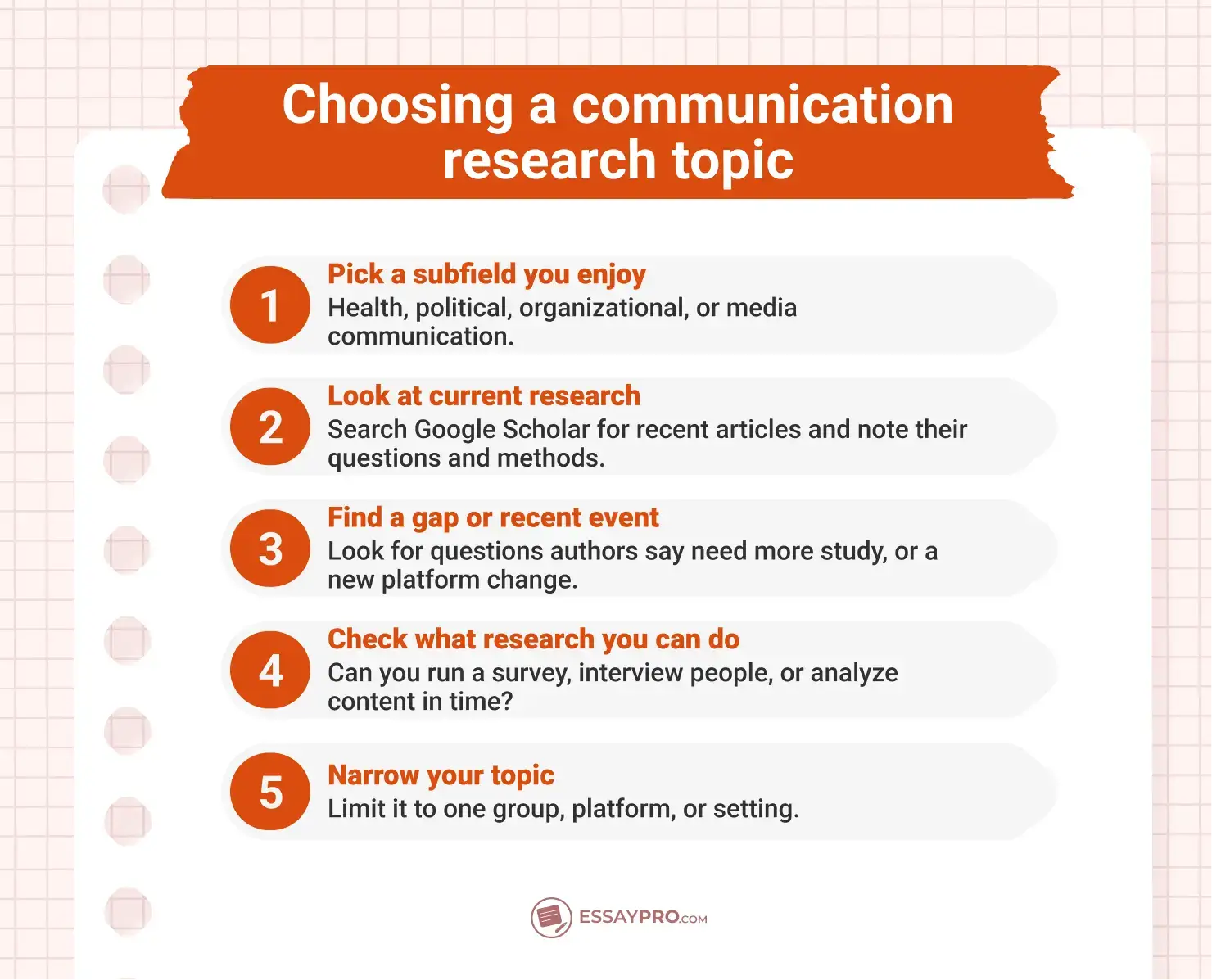
- Choose a subfield that you enjoy. Maybe it's health communication, political communication, organizational communication, or media communication. Whatever it is, you will be spending many hours learning about this topic, so you want to enjoy it.
- Look at current research. Use Google Scholar and find articles within your subfield that were recently published. Note the research questions and methodology they used.
- Identify a gap or recent event. There may be research questions mentioned in articles that the author wants further researched. Or there could be a new event or a change to a website. Having a gap will help with your paper.
- Understand what kind of research you can conduct. You will want to see whether you can conduct surveys, interviews, or even content analysis. If you cannot gather information for your question in a timely manner, choose another question.
- Limit your topic to what you can complete. Choose communication research questions that you can limit to one group, platform, or setting. A narrow question you can finish beats a broad one you can’t.
Four lenses for studying communication
There are 4 different perspectives used by communication researchers. All are lenses that can be applied to communication studies. Once you decide on your lens, it can help guide the communication research topics you choose. Here is how Jimmie Manning of the University of Nevada, Reno, breaks down these 4 research paradigms.
- Social Science: Looks at communication as objective. Can we quantify our communication? What variables affect our communication? This can include surveys and experimental designs. Are students who see gain-framed messages more likely to take flu shots?
- Interpretive: What does our communication mean to us? We want to know more about people's experiences through interviews, field notes and textual analysis. How do first-generation students talk to their professor?
- Critical: Who is being left out? Why are some groups given more power than others? This is done to create change in society. Many times uses discourse or media analysis. What types of people are represented when news articles report on protests?
- Postmodern: How are truths constructed? No longer looking for one true answer, but many answers that can change over time. Often deconstructing texts and ways.

Write with confidence
Work with professional writers to complete your research paper on time.
What makes good communication research topics?
What makes good communication research topics is being able to dive into the subject matter while having plenty of information to draw on.
- Current event: Can be applied to something happening today. For example, after so much AI exposure, will you still believe the news?
- Can be narrowed down to a question: One of the narrow example topics related to communication could be: Will adopting an alias on a forum result in a more civil exchange of ideas?
- Researchable: There must be studies or information that you can use to help back up your claims. Health research is great because there are many articles about whether the campaign worked.
- Something new: You can take what someone else did and apply it to a different subject. Example: testing a familiar theory on older adults’ video calls.
- Something you enjoy: For example, if you love playing video games, you could research people who play together on voice chat.
Final thoughts
To come up with good communications research topics, just choose something that interests you and a question you can research about it. Once you find your subject, look at current studies on that topic and try to focus on one specific type of people, website or location. See what information you can get your hands on and what your project timeframe looks like.
FAQs
Which areas does communication research cover?
What is the best topic for communication research?
How do you pick communication topics?

Sopho Miller
is an experienced content writer who specializes in digital marketing, business, and academic topics. With a Master’s degree in Digital Marketing, she combines her expertise with a practical approach to create clear, engaging, and educational content. She crafts detailed guides and resources that support students in their academic journey. Outside of work, Sopho stays current with the latest industry trends and regularly attends workshops to further sharpen her skills.
.png)