

The best temperature for sleep is between 65 and 68°F (18-20°C) for most adults, though the exact number is not set in stone, as it changes a little with individual comfort requirements. Why the room works better on the cooler side is a matter of physiology. Core body temperature (the temperature of your internal organs) drops about 1-2°F (0.5-1°C) as bedtime approaches. The cooler the room, naturally, the faster that decline.
Cross about 75°F (24°C) and deep sleep is disturbed, while awakenings become more frequent, sometimes even without us noticing. The cost of this is harsh for any functioning adult, but even more so for younger people. A 2023 study of first-year college students found that each hour of sleep lost below eight predicted around a 0.07-point drop in GPA, which further proves why sleep is important for students.
Does Your Body Temperature Change When You Sleep?
Yes, it does. Your body follows a circadian rhythm, the roughly 24-hour internal cycle that governs sleep, alertness, hormone release, and temperature. What also follows it is the core temperature, which is the highest in late afternoon and lowest in the hours just before dawn. Here's the sequence across a single night:
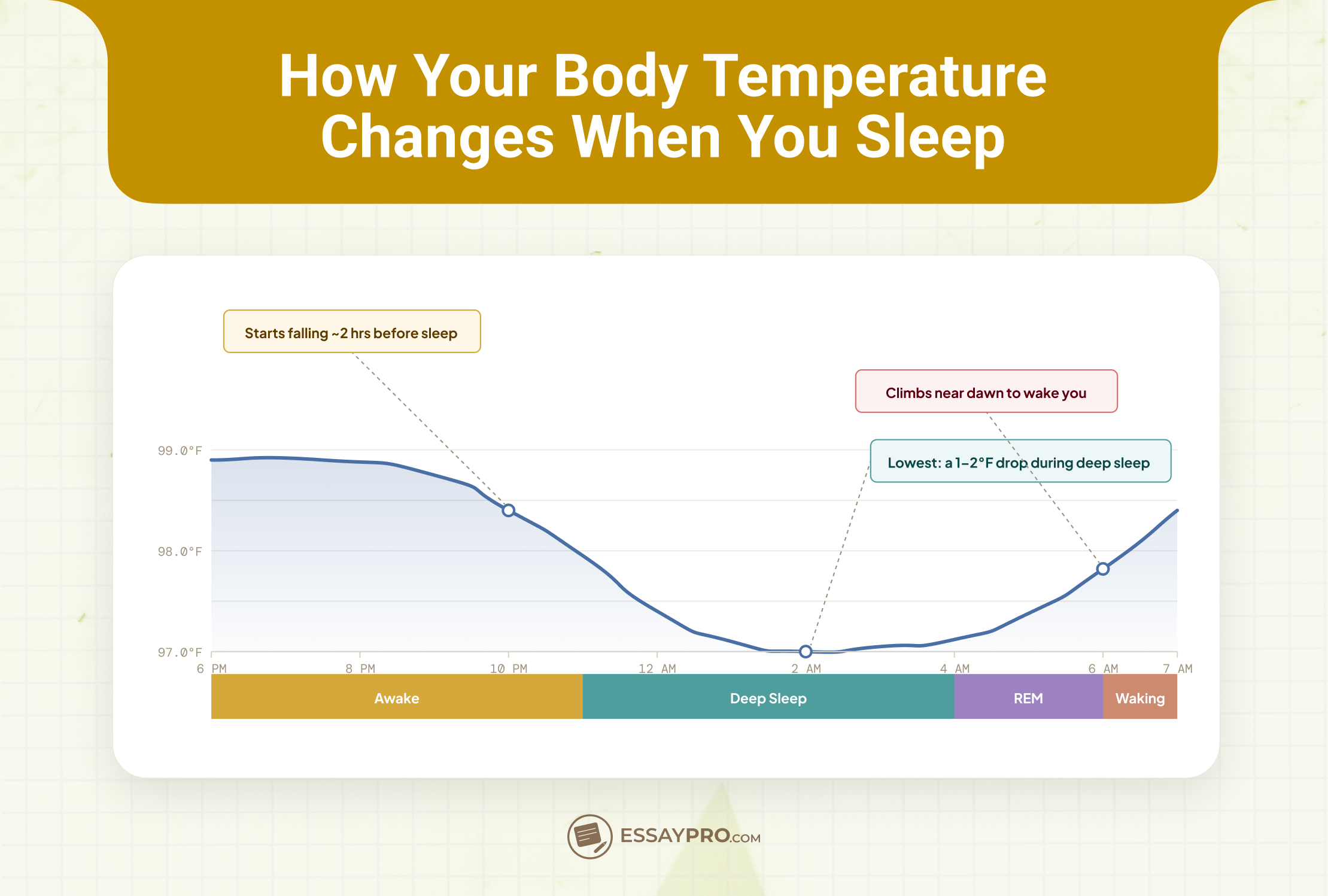
- Roughly two hours before sleep, core temperature begins to fall.
- Blood vessels in your hands and feet dilate, which vents heat and pulls the core down further.
- You fall asleep, and the cooling continues into NREM sleep (non-rapid-eye-movement sleep, the lighter and then deeper stages that make up most of the night).
- Core temperature bottoms out during slow-wave sleep, also called N3 or deep sleep, the stage responsible for tissue repair and memory consolidation.
- In REM sleep (rapid-eye-movement sleep, when most vivid dreaming occurs), thermoregulation largely switches off, and your body drifts toward the temperature of the room.
- Near morning, the temperature rises again, one of the signals that helps you surface into wakefulness.
How Do Heat and Cold Affect Sleep?
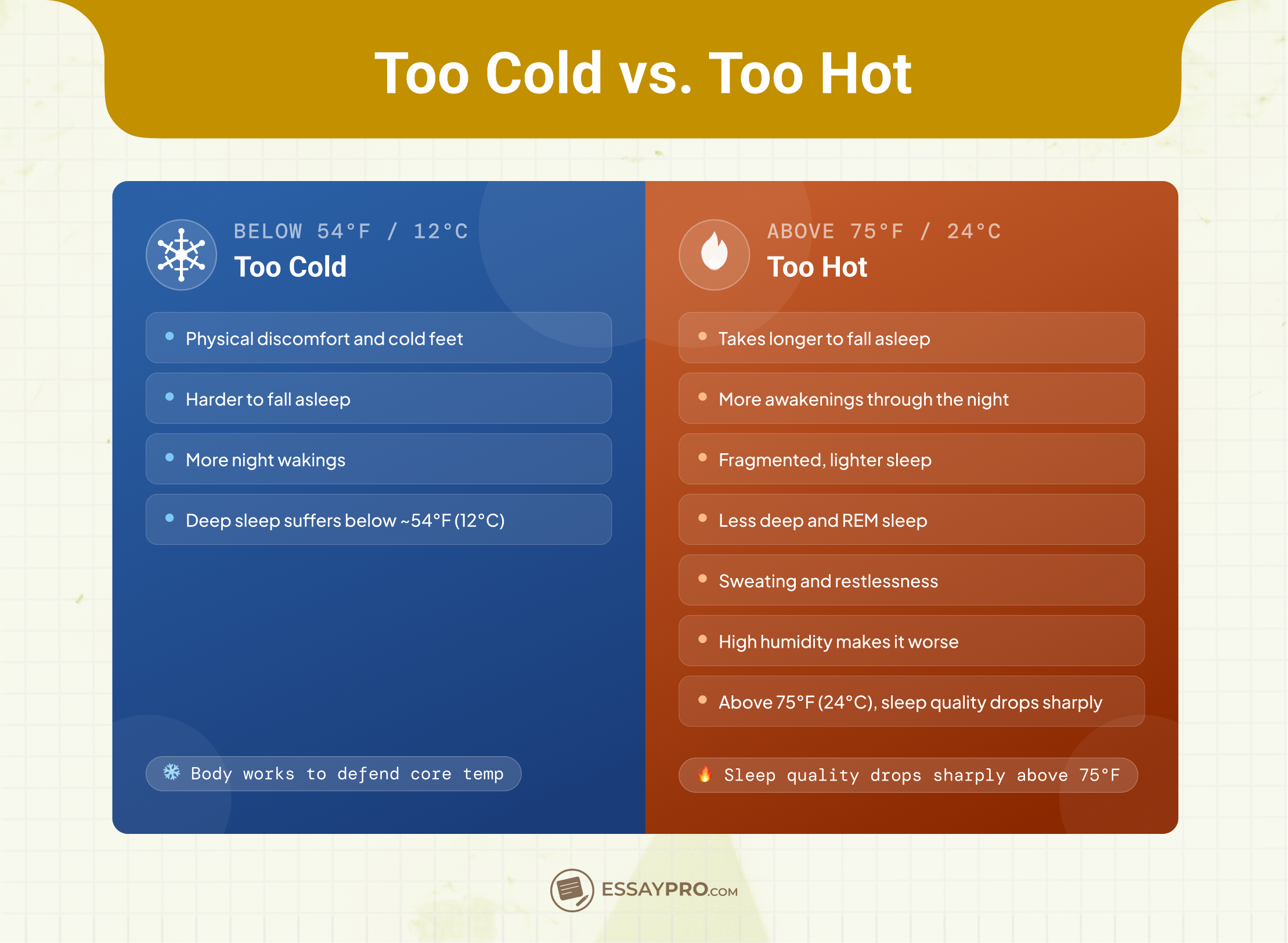
Both extremes wreck sleep through different mechanisms. Here’s a quick comparison table before we get into the details:
Sleeping in a Room That Is Too Hot
Heat does obvious harm. A warm room blocks the core from shedding heat, so sleep onset drags, and you wake repeatedly, often without remembering it. Controlled experiments show heat cuts both slow-wave sleep and REM, the two stages that make you feel rested. The numbers back this up:
- Hot nights nearly double the share of people sleeping under six hours.
- A 2025 USC study projects U.S. adults could lose between 8.5 and 24 hours of sleep per year by 2099.
- The heaviest losses fall on older adults and lower-income households.
Ask why is sleep important for students, and heat is a big part of the answer: a stuffy dorm room shortens deep sleep the week before finals. Fixes: drop the thermostat 2–5°F at night, run a fan, hold humidity near 40-60%, take a lukewarm shower before bed.
Sleeping in a Room That Is Too Cold
Cold brings its own headaches. Physiologically, discomfort comes first, then icy feet at 3 a.m. and a wide-awake brain. A 62°F (17°C) room can be made perfect with the right bedding. It’s generally advised to stick to a warm duvet, wool socks, and proper pajamas. Past about 54°F (12°C), though, the body pulls blood inward and deep sleep degrades. Extreme cold adds nothing.
Statistics on Sleep and Students
Set the bedroom temperature well, and you sleep better; sleep better, and much of what drives classroom performance improves along with it. That is the entire chain, and it only works in that order.
The importance of sleep for college students becomes obvious the moment these figures meet an exam calendar. If you consider what deep sleep does (brain consolidates new information into long-term memory during this time), along with the fact that it depends on a cooled, undisturbed body, one broken night can undo the consolidation the studying was supposed to earn.
That is why the all-nighter so reliably fails; the hours you reclaim for review get subtracted from the sleep that would have stored the material. So the smarter plan, unglamorous as it sounds, reverses the order. Sleep quality is the real variable. Concentration, memory, and grades follow it, and the thermostat counts only because it changes how well that sleep proceeds.
How Can You Maintain an Optimal Sleeping Temperature?
The importance of sleep for college students makes this worth getting right, and room temperature is one of the few inputs fully in your control. How to hold the range:
- Set the thermostat before bed. Target 65-68°F (18–20°C). You can move the dial a little as you see fit.
- Reach for a fan or AC on warm nights. A breeze over your skin draws heat off when the thermostat can't keep up.
- Ventilate. A well-ventilated room is linked to better sleep. A cracked window in mild weather helps you breathe.
- Choose bedding you can layer. Cotton or linen for warm nights, heavier covers for cold ones.
- Let sleepwear help. A University of Sydney study found faster sleep onset in wool than cotton, since wool moves heat and moisture off the skin.
- Watch the humidity. Keep it near 40–60%; when the air is too damp, sweat cannot evaporate, and an in-range room feels hot.
- Close curtains or blinds against a hot afternoon sun. The same covered windows hold heat when it turns cold.
- Take a warm shower or bath one or two hours before bed. The cooldown that follows drops your core temperature and deepens sleep.
Final Thoughts
The best temperature for sleep lands between 65 and 68°F (18–20°C), the range that supports your body's natural overnight cooling. Push the room too hot or too cold and sleep fragments, deep and REM stages shrink, and focus, memory, and grades all suffer. A few simple moves, the thermostat, a fan, breathable bedding, and a warm pre-bed shower, keep the room right.
FAQs

What Is the Best Temperature for Sleep?
Is 65°F a Good Temperature for Sleeping?
Is 70°F Too Hot for Sleeping?
Is It Better to Sleep in a Cold or Warm Room?
Does Room Temperature Affect Sleep Quality?
How Much Sleep Do Students Need?
How Does a Good Night's Sleep Affect Students?
Can Getting Enough Sleep Improve Academic Performance?

Ana Ratishvili
Ana is a professional literary writer with a Master’s Degree in English literature. Through critical analysis and an understanding of storytelling techniques, she can craft insightful guides on how to write literary analysis essays and their structures so students can improve their writing skills.